
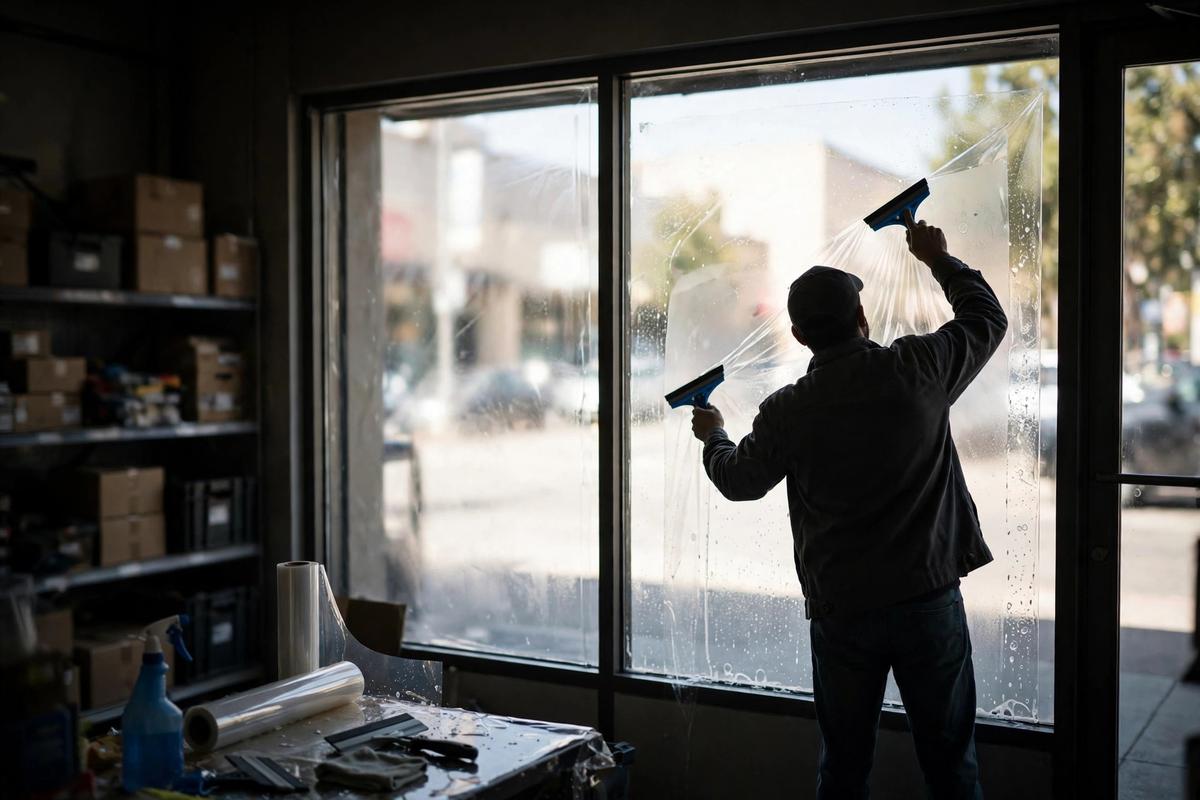
Security window film is worth considering for most storefronts in Jeffersonville where glass is the easiest way into the building, which can describe retail, restaurant, and office frontage. It does not make glass unbreakable. It changes how glass fails, holding shattered panes in the frame so an opening is harder to make. Whether it is worth it for a given building depends on the glass, the frame, the exposure, and what sits behind the glass. This post works through those questions without prices or performance figures.
Below we cover what the film actually does, what decides the cost, which buildings on Spring Street and Veterans Parkway benefit most, the review question for downtown storefronts, and the mistakes that waste money on a film that looks right but performs wrong.
The short answer: security window film for storefronts
Security window film is worth considering for storefronts in Jeffersonville, IN when your glass is the easiest way into the building, which can describe retail, restaurant, and office frontage along the 10th Street corridor and the downtown blocks. It is least worth it on glass that already sits behind a security shutter or a second barrier, where the film adds little.
The value question comes down to three things: what the glass protects, how exposed the glass is, and whether the frame can hold film that is doing its job. A storefront with visible inventory behind large panes, facing a quiet side street, is a different case from a small office window facing a busy sidewalk. The honest answer starts with the building, not the film.
That gap is where the value lives. The film is not a force field. It is a delay: it makes an opening harder and slower to make, which changes the calculation for someone trying the glass.
What security window film actually does to storefront glass
Security window film changes how glass fails. Untempered storefront glass shatters into large shards that fall away from the frame, leaving a hole a person can step through. Film-laminated glass cracks but stays in the frame, held together by the film, so making an opening takes more effort and more time.
There are grades worth knowing, from thinner safety film to heavier anti-shatter grades. Thinner film is clear, does not change the look of the glass, and suits low-risk frontage. Heavier grades suit buildings where repeated impact is the concern. No thickness figure is stated here; ask what grade suits the glass and the frame, and what is stated in writing about it.
One detail most storefront owners miss: film performance depends on the frame. A film that holds glass together is only as strong as the glazing gasket and the frame that glass sits in. On older downtown Jeffersonville buildings, the frame is often the weak point, not the glass. A frame assessment comes before a film recommendation.
If you also want heat and glare control on the same glass, storefront window tinting can combine security and solar performance in one film, so ask whether one visit addresses both.
What decides the cost of storefront security film in Jeffersonville
No prices are published on this site, and no figure is stated here. A quote for storefront security film in Jeffersonville depends on the film grade, the number and size of panes, the frame condition, whether an attachment system is needed on older frames, and whether glass doors are included.
What moves the figure:
- Film grade. Thinner safety film sits below heavier anti-shatter grades. The grade follows the risk and the frame, not a single rule.
- Number and size of panes. A full storefront with several large panes is a different job from a single window.
- Frame condition. Older frames may need an attachment system so the film can do its job. That adds to the work.
- Attachment system. On older frames, an attachment system bonds the film edge to the frame. Ask whether the frames need one, and what the manufacturer states for the film and frame in question.
- Glass doors. Doors carry hardware and see constant use, so door coverage is quoted separately from windows.
Compare film with replacement carefully: they are different responses. Replacement fixes glass after it breaks; film makes breaking in harder before it happens. No cost comparison is stated here, and no payback figure is claimed.
Ask how a quote is built before comparing it with another: film, fitting, frame work, and door coverage. Call during open hours to talk through timing around business hours.
Does security window film prevent break-ins in Jeffersonville, Indiana
Security window film does not prevent break-ins in Jeffersonville, Indiana. It makes successful ones harder. No film stops a determined person with tools and uninterrupted time. What film does is turn a quick smash into a longer, louder effort, which changes whether an attempt succeeds.
The difference shows in what happens after an attempt. Glass with film cracks but stays in the frame, so the opening is harder to make. Glass without film leaves a hole. That is the honest claim for film, and it is a meaningful one, but it is not a promise that no break-in can succeed.
Two local factors shape the question here. First, Jeffersonville's commercial corridors mix high-traffic retail with quieter side streets, and the quieter blocks, off 10th Street and away from the main frontage, are where glass can be worked on unseen. Second, older downtown storefronts may carry older glass in old frames, where the frame assessment matters as much as the film grade.
For businesses that want security film plus solar control on west-facing glass, commercial window tinting may address both in one pass — ask whether that is how the work is arranged. And for downtown storefronts, the historic review question applies: whether film that changes exterior appearance needs review is unresolved, so ask before work starts. See the law guide for the building-film section, which covers the review and sign questions without figures here.
What is the best security window film for storefronts?
The best security window film for storefronts in Jeffersonville, IN is the grade that matches the glass, the frame, and the risk, fitted with the attachment the frame needs. A mid-weight clear safety film with an attachment system on older frames is often discussed for storefronts, but the honest answer starts with a frame assessment, not a grade recommendation.
Here is how film is matched to storefront type:
- Restaurants and cafes: clear safety film, so the glass stays clear for signage and visibility. Ask what the manufacturer states about impact from either side.
- Retail with visible inventory: a heavier grade, plus a security window film grade that also blocks ultraviolet light so merchandise in the window does not fade.
- Jewelry, pharmacy, electronics: a heavier anti-shatter grade with an attachment system, for repeated-impact resistance — ask what the manufacturer states for the grade and frame in question. See the security window film page.
- Office frontage: a lighter clear film, often paired with a privacy window film strip at eye level so passersby cannot see monitors or files.
Fitting matters more than brand. A premium film installed with a contaminated edge or a poor attachment on an old frame will fail early. Ask what film line is offered, what is stated in writing about the film and the install, and how the frame is assessed before quoting. No brand names are published on this site.
Where storefront security film pays off most in Jeffersonville
Storefront security film matters most on glass that faces a parking lot, an alley, or a side street with low foot traffic. Those are the panes that can be worked on without being seen, and those are the panes where film changes the outcome most.
Downtown blocks along Spring Street and Court Avenue carry older storefronts, many with single-pane glass in old frames, where the frame assessment matters most. Veterans Parkway and the 10th Street corridor carry newer frontage with larger panes and more visible inventory. Both raise the film question, for different reasons.
If your building sits in one of the older downtown blocks, the frame is usually the weak point, not the glass. A straight answer on the walkthrough, that film cannot perform on a failing frame, is more useful than a quote for film that cannot do its job. For buildings in the historic district, ask the review question before work starts.
One more local note: Jeffersonville sits across the river from Louisville, and commercial buildings on both sides of the river face the same glass questions. The building-film rules, including the sign and review questions, are covered in the law guide.
Common mistakes with storefront window security in Jeffersonville
A common mistake with storefront window security in Jeffersonville is buying film by price and skipping the frame assessment. Film on a frame that cannot hold it is money wasted, whatever the film grade.
Here is what to watch for:
- Dry attachment on old frames. Film edges can lift sooner on wood or thin aluminum without a proper attachment — ask what the manufacturer states for the frame in question. Ask what an attachment system costs up front and how long it holds.
- Skipping the door. Entries come through the glass door as well as the window. If the door is not filmed, the windows alone leave a gap.
- Filming only the front. Side and rear glass is where an attempt is least visible. Cover the whole envelope or accept the gap knowingly.
- Hiring an installer with no commercial experience. Storefront film is a different skill from car tint. Ask about commercial experience before booking.
- Ignoring the lease. Some commercial leases require landlord approval for window film. Get it in writing before install day.
Ask whether the shop walks the storefront before quoting, so frame issues, door hardware, and lease questions are flagged up front. That walkthrough is where the quote gets its accuracy.
When to call a professional
Call a professional when your storefront has several panes, when the frames are old, or when the glass is the only thing between your inventory and the sidewalk. Storefront film looks simple and is not: the frame, the attachment, and the fitting decide whether it performs.
Ask whether storefront security film is offered in Jeffersonville, and whether film is the right fix for a building. Sometimes the answer is a frame repair first, or a different grade than the one first considered.
If you are comparing film against other glass options, the security window film page covers the heavier grade, and the shop can talk through both grades on the same visit so the difference is clear.
Get help with window tinting in Jeffersonville
If your storefront glass is the weak point in your security plan, call Doyles Window Tinting at (812) 382-2757 during open hours to talk through timing around your business day, and to ask whether a walkthrough is offered before quoting.