
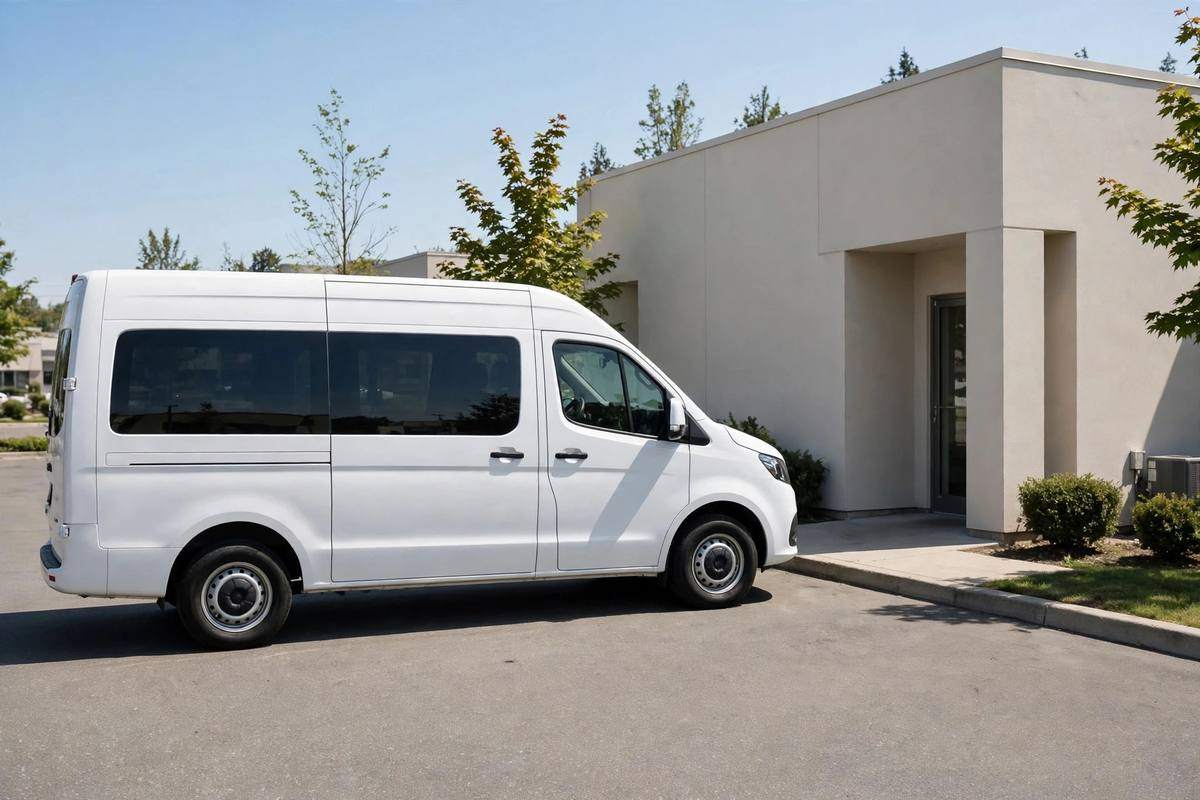
Work vehicles of many kinds
Service vans, work trucks, delivery vehicles, and business cars each bring different glass and different uses. The conversation starts with what the vehicles are and how they are used.
Fleet film is discussed vehicle by vehicle, because no two work vehicles live the same life. The five topics below are the qualified shape of the fleet conversation.
Service vans, work trucks, delivery vehicles, and business cars each bring different glass and different uses. The conversation starts with what the vehicles are and how they are used.
Matching film and shade across vehicles is a common fleet question: a consistent look, and consistent behavior on the glass, from vehicle to vehicle. Consistency is discussed as a question, not assumed.
Drivers spend the working day in the glass. Heat feel, glare, and visibility through the working hours are the questions that matter, and they are discussed in those terms.
Ceramic, carbon, and dyed film weigh differently for work vehicles than for a garage-kept car. The tier conversation follows use: hours outside, routes, and what the vehicles carry.
Which vehicles, in what order, and how the work fits around the working week are questions for the call. This page states no scheduling promise; the call is where the order is discussed.
Fleet window tinting means applying film to the glass of vehicles used for work, discussed here as a conversation about those vehicles rather than as a program with stated terms. The vehicles vary: vans that carry tools, trucks that carry crews, delivery vehicles that run routes, and cars that carry people to appointments. The questions vary with them: film tier for hours spent outside, shade and coverage for consistency across the vehicles, and old film on vehicles bought used. Nothing on this page states how many vehicles a fleet must have, how quickly work is done, or where work happens beyond the shop, because none of that has been verified. The River Ridge Commerce Center, the large industrial and commercial park in the wider area, is background context for work-vehicle demand in general: it is not a neighborhood, and no employer there is named or endorsed here.
Jeffersonville work driving crosses the Ohio River as a matter of routine: the Kennedy Bridge carries I-65 southbound, the Lincoln Bridge carries I-65 northbound, the Clark Memorial Bridge carries US-31, and the Lewis & Clark Bridge carries I-265 at the east end, while the Big Four Bridge is for pedestrians and bicycles only. Indiana and Kentucky window tint rules differ, so drivers whose work routines cross the river should read the Indiana–Kentucky tint law guide before choosing film for work vehicles. Trucks and SUVs are a real part of the local vehicle conversation, and work vehicles that sit outside all day take the full force of Jeffersonville's long, hot, humid summers. Call (812) 382-2757 during shop hours, Tuesday through Saturday, 9 AM to 5 PM, and ask about pricing for your vehicles.
Fleet film starts with the vehicles and their working lives. The steps below keep the conversation qualified and vehicle by vehicle.
Call the shop
Call (812) 382-2757 during shop hours, Tuesday through Saturday, 9 AM to 5 PM. The shop is closed Monday and Sunday. Say you are asking about work vehicles.
Describe the vehicles and their use
What the vehicles are, how many, how they are used, and what the glass looks like now. Routes, parking, and hours outside all belong in the description.
Settle film and a workable order
Film tier, shade, and coverage, and the order the vehicles are discussed in. Ask about pricing for your vehicles on the same call.
Plan around shop hours
The shop is at 1107 Reeds Ln. Ask where the work happens for your vehicles, how the work fits around the working week, and what care questions to raise.
Describing the vehicles
What the vehicles are, how they are used, and what the glass looks like now. A good description, vehicle by vehicle, is the foundation of the fleet conversation.
Glass preparation
Film shows what is under it, so the glass is cleaned and checked first. Old film and adhesive on used vehicles matter here.
Fit to each vehicle
Film is shaped to each window of each vehicle. Different shapes across a fleet raise fit questions worth asking about.
Curved glass
Rear glass curves in more than one direction, and film has to follow the curve without creasing or lifting at the edges.
Edges and consistency
Edges are where lifting starts, and consistency from vehicle to vehicle is what the eye notices. Both are worth looking at when work is finished.
Looking the work over
Clarity, consistency across vehicles, and the state of the edges are what to look at. Ask what to look for.
Care questions
Cleaning and curing questions belong before the work. Ask, and note the answers, rather than guessing afterward.
Which film tier for work use
Hours outside, routes, and what the vehicles carry decide the tier conversation. Ask what each tier would mean for vehicles worked this hard.
Consistency across the vehicles
Matching film and shade from vehicle to vehicle is a question to settle explicitly, especially where vehicles were bought at different times.
Old film on used vehicles
Vehicles bought used often carry film from earlier work. Ask how removal is handled and how the glass is checked before new film goes on.
What the order looks like
Which vehicles first, and how the work fits the working week, are questions for the call. No scheduling promise is stated here.
01
What to ask: Vans on routes cross the river, sit in sun between stops, and carry drivers through the longest hours of the day. The conversation covers film tier, glare, and consistency across the vans.
→ Routes and hours set the terms for service vans.
02
What to ask: Trucks that sit outside take the full force of humid summer afternoons. The conversation covers heat feel, glare, and which tier fits vehicles worked this way.
→ Outdoor hours dominate the truck conversation.
03
What to ask: Used vehicles often arrive with film that has aged, shifted color, or started to lift. The conversation covers removal, the glass underneath, and which tier goes on next.
→ Removal comes first, tier choice second.
04
What to ask: Vehicles bought at different times, in different shapes, that should read as one set. The conversation covers film, shade, and coverage, settled explicitly vehicle by vehicle.
→ Consistency is settled, not assumed.
Work vehicles in Jeffersonville cross the river, sit in sun, and run long days. The topics below follow the vehicles, the use patterns, and the conditions that shape the fleet conversation.
Service vans
Vans on routes, carrying tools and crews through long days. Film tier, glare, and consistency across vans are the questions.
Work trucks
Trucks parked outside between jobs, taking sun all day. Heat feel and glare dominate, and the tier conversation follows use.
Delivery vehicles
Vehicles on delivery routes, in and out all day. Drivers' hours in the glass are the measure, and the conversation follows them.
Business cars
Cars used for appointments and travel, crossing the river as part of the working week. The same tier and coverage questions apply.
Mixed fleets
Sets of vehicles in different shapes and ages. Consistency across the set is the question, settled explicitly vehicle by vehicle.
River-crossing work driving
Work routes cross the Kennedy, Lincoln, Clark Memorial, and Lewis & Clark Bridges. Low sun and glare on crossings are part of the working day.
Long, hot, humid summers
Vehicles parked outside through Jeffersonville summers take heat for months at a time. Film conversations start from those working conditions.
Industrial and commercial context
The wider area's industrial and commercial parks are background context for work-vehicle demand in general. No employer is named or endorsed here.
Old film on working vehicles
Working vehicles change hands, and old film travels with them. What is on the glass now shapes the removal and re-tint conversation.
Fleet film is discussed for working conditions: heat, glare, old film, and inconsistency across vehicles. The four below come up most.
Problem
Drivers in glass all day feel the heat that builds through Jeffersonville summers. Film tier is discussed for the hours drivers actually spend in the vehicles.
What to discuss
Hours outside, routes, and parking, and what each film tier would mean for vehicles worked this way.
Problem
Low sun, wet pavement, and river crossings combine into glare that wears on drivers through the working day. The conversation starts with the routes.
What to discuss
Which windows the glare comes through on the routes, and how film is weighed for those windows.
Problem
Vehicles bought used carry film that may have shifted color, hazed, or started to lift. Removal comes before any new film conversation.
What to discuss
How removal is handled, how the glass is checked, and which tier fits next, given the vehicle's working life.
Problem
Vehicles bought at different times can carry different film, different shades, and different states of wear. Consistency is a question to settle explicitly.
What to discuss
Film, shade, and coverage for each vehicle, and how the finished set holds together.
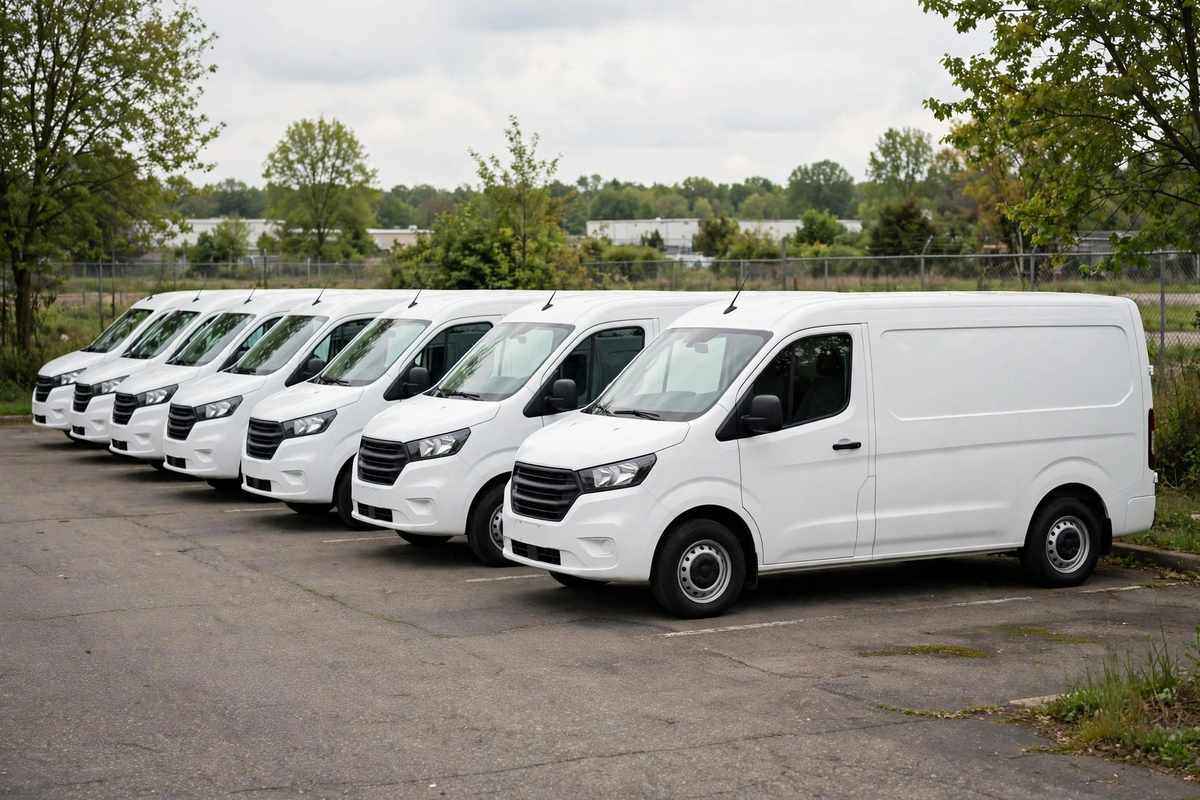
Businesses ask about fleet film for drivers' working conditions, for consistency, and for vehicles bought used. For more background, see the Jeffersonville service-area page and the post on how much car window tinting costs in Jeffersonville.
Drivers' working conditions
Heat feel and glare through the working day are the complaints that start fleet conversations. Film is discussed for the hours drivers spend in the glass.
Consistency across vehicles
A set of vehicles that reads as one set, in film and shade, is a legitimate business question. Consistency is settled explicitly, vehicle by vehicle.
Used vehicles, honestly handled
Old film on used vehicles raises a removal question before any tier choice. The glass underneath decides what comes next.
Work driving across the river
Routes that cross the Ohio River add glare and long hours in the glass. The cross-river context is part of the fleet conversation in Jeffersonville.
Google reviews ★★★★★4.8
The Google listing shows 4.8 stars across 345 reviews. Three of those reviews are quoted word for word further down this page, with the reviewer's name and the date Google shows.
Five-star reviews ★★★★★322
Most of the 345 reviews are five-star: 322 of them. The rest are spread across four, three, two, and one star.
All other ratings —23
Three four-star, four three-star, six two-star, and ten one-star reviews make up the other 23, and all of them count toward the 4.8 average.
Reviews quoted here ★★★★★3
Three reviews are quoted on this page, word for word, with the reviewer's name and the date Google shows. No review text has been edited.
Fleet film is a vehicle-by-vehicle conversation, and it starts with a call. Call Doyles Window Tinting at (812) 382-2757, Tuesday through Saturday, 9 AM to 5 PM, from the shop at 1107 Reeds Ln in Jeffersonville. Describe the vehicles and their working lives, and ask about film, pricing, and the order the work is discussed in. The Google listing shows 4.8 stars from 345 reviews.
Three five-star Google reviews, quoted word for word, with the name and date Google shows. The shop's overall rating is 4.8 stars from 345 reviews.
“Amazing price and great service! Doyles has done every vehicle I own and even did the windshield on the can am x3. Best in the business!”
Chris Nalley
5 stars · 2 months ago · Google review
“Doyle’s is the only place I take my vehicles to for tint. They do excellent work and have great prices. They stand behind their lifetime warranty no questions asked. The new ceramic tint is amazing. It keeps the inside of my vehicle’s cooler in the summer sun. The ceramic is definitely worth the extra money. If you’re looking for a trustworthy place that does excellent work then Doyle’s is the place for you.”
Michael Osborne
5 stars · 9 months ago · Google review
“If you're looking for reliable friendly service and extraordinary quality, then you have to go to Doyle's! I've taken 4 cars to him now and every time was an amazing experience. No bubbles or light gaps like I've had in the past from another other local shop. Can't say enough good things about Doyle's Window Tinting!”
Meghan Vest
5 stars · a month ago · Google review
Plain answers, with the limits stated. Anything about specific vehicles, order, or price is a question for the call.
The head page for vehicle film: vehicle types, coverage, windshield questions, and removal and re-tint, with the cross-river driving context.
View Automotive Window TintingThe premium film tier, discussed for heat feel and glare on vehicles and glass alike, with the coating disambiguation stated plainly.
View Ceramic Window TintingThe middle film tier, set out honestly between dyed and ceramic. This page explains where carbon film fits and what it adds.
View Carbon Window TintingFilm for offices and storefronts along Jeffersonville's corridors, including the review and sign questions that belong at the start.
View Commercial Window TintingFilm discussed in general, qualified terms for how glass behaves if it breaks, framed as a discussion topic for a call or visit.
View Security Window FilmFilm for home glass, with housing-era framing and the historic-home and association questions that need asking.
View Residential Window TintingCall (812) 382-2757 to ask about film for work vehicles, or to ask any question this page raised. The phone is the contact channel listed here. Mention the vehicles, their use, and the glass, and ask about pricing and the next step during shop hours.
Phone
(812) 382-2757Address
1107 Reeds Ln, Jeffersonville, IN 47130
Hours
Monday: Closed
Tuesday–Saturday: 9 AM–5 PM
Sunday: Closed
Call during shop hours