
Doyles Window Tinting
Get Estimate

Ceramic Window Tinting in Jeffersonville, IN

The premium film tier, for heat feel and glare.


Ceramic window tinting is the premium tier of window film: the tier most often discussed when heat felt through the glass is the main complaint. This page explains what ceramic film is, how it differs from carbon and dyed film, and what it is not. Ceramic tint is window film. It is not ceramic coating, which is a different product for paint, and coating is not part of the window-film work described here. Doyles Window Tinting is at 1107 Reeds Ln in Jeffersonville, open Tuesday through Saturday, 9 AM to 5 PM.

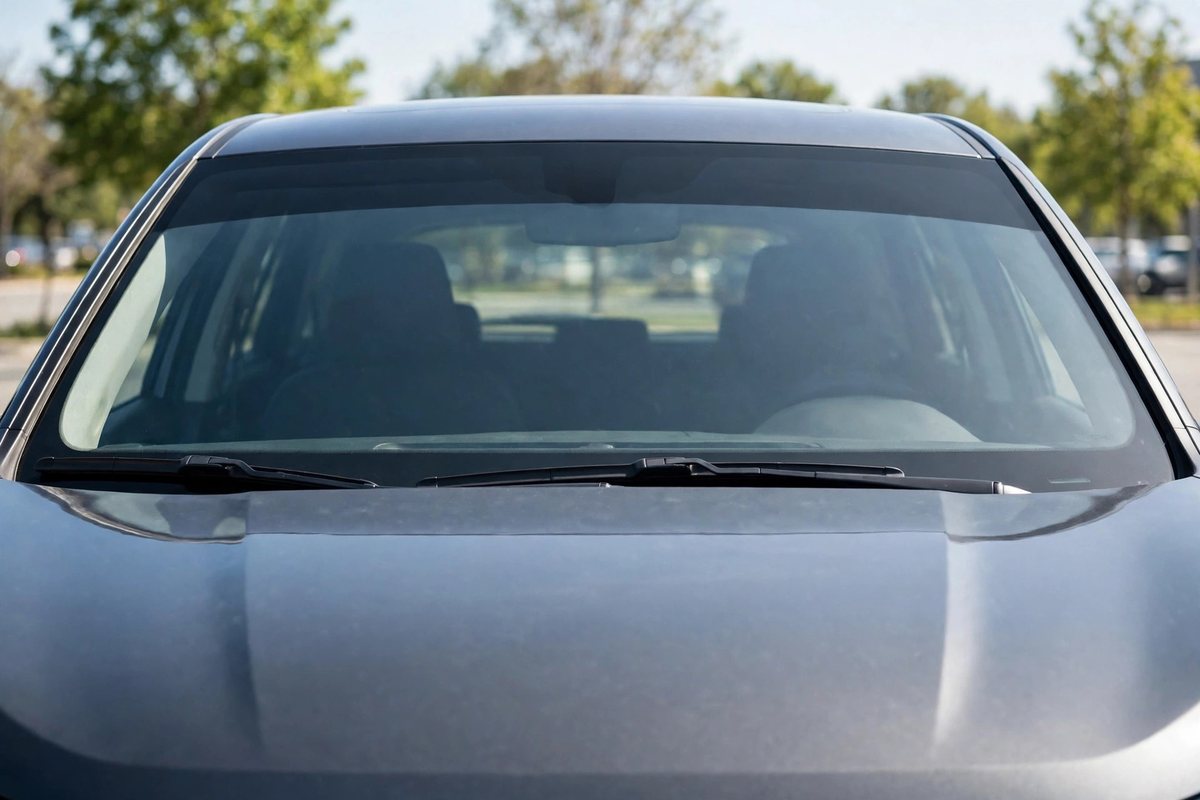
Car windshield with a narrow tinted sun strip across the top, front view
345 Google reviews 4.8-star average
Open Tuesday–Saturday 9 AM to 5 PM
Jeffersonville 1107 Reeds Ln
Call (812) 382-2757

What ceramic film brings to the conversation

Ceramic film enters the conversation when the lower tiers leave something unresolved: heat felt through the glass, glare that will not ease, or film that has shifted color before. The six topics below are how that conversation usually runs.

Heat feel, discussed first

Ceramic film is the tier most associated with the heat you feel through glass. The discussion is qualitative on this site: no figures are stated, because none have been supplied with a film specification. Ask what ceramic film would mean for your glass and your use.
Glare without a heavy look

Ceramic film is often discussed for glare relief on glass where a very dark look is not wanted. Shade and film type are separate choices, and ceramic film lets the two be weighed apart from each other.

Color that holds its own

One reason drivers and owners move to ceramic film is past experience with dyed film shifting color. Ceramic film is discussed as the tier where color stability is least in question, in general terms and without promises about any particular outcome.

Signal questions

Because ceramic film has no metal layer, it is often the tier discussed when questions come up about phones, navigation, and toll devices. Raise the question on the call if it matters for your vehicle or building.

Vehicles and buildings alike

Ceramic film comes up for cars, trucks, and SUVs, and also for home and commercial glass facing strong sun. The film tier is the same conversation; the glass, the exposure, and the questions around it differ.

Removal before ceramic goes on

Where old film is failing, removal and glass preparation come before any new film. Ask how the old film is handled and how the glass is checked, especially on rear windows with defroster lines.

What ceramic window tinting does, in plain terms


Ceramic window film is a film tier built around ceramic compounds rather than dye or metal, and it sits at the premium end of the film range. In the market, ceramic and ceramic-infrared film are the terms used for the top tier on heat feel, above carbon in the middle and dyed at the entry end. That ordering is the honest starting point: ceramic film is discussed first when heat felt through the glass dominates the conversation, and the other tiers are discussed when the balance of concerns is different. This page is about ceramic window film only. Ceramic coating is a paint treatment, not window film, and it is not what is described anywhere on this page; the two products share a word and nothing else. Anyone asking about coating should say so plainly on the call, so the conversation does not start from a misunderstanding.

In Jeffersonville, ceramic film comes up for daily drivers parked outside, for west-facing home glass that takes the afternoon sun, and for storefront glass along corridors like Veterans Parkway and East 10th Street. The same long, hot, humid summers that make any film conversation worth having are what push ceramic film to the front of it. Indiana and Kentucky window tint rules differ, so drivers whose routines cross the Ohio River should read the Indiana–Kentucky tint law guide before choosing film for a vehicle. For buildings there is no equivalent pair of rules to weigh, but older and street-facing glass raises its own questions, covered on the residential and commercial pages. Call (812) 382-2757 during shop hours, Tuesday through Saturday, 9 AM to 5 PM, and ask about pricing for your glass.

How a ceramic film conversation runs

Ceramic film is a choice to talk through, not a default to assume. The steps below are the shape of that conversation, by phone, during shop hours.

01

Call during shop hours

Call (812) 382-2757, Tuesday through Saturday, 9 AM to 5 PM. The shop is closed Monday and Sunday. Say whether the glass is on a vehicle, a home, or a commercial building.

02

Describe the glass

Which windows, which direction they face, how much sun they take, and what is on them now. Old film, factory-tinted rear glass, and large west-facing panes all change the conversation.

03

Weigh ceramic against the other tiers

Ask what ceramic film would add over carbon or dyed film for your situation, and what it would not. Pricing for your glass and coverage is part of the same call.

04

Plan the visit

The shop is at 1107 Reeds Ln. For vehicles, ask where the work happens. For building glass, ask what the next step looks like. Ask about care questions before anything is settled.

How ceramic film work is talked about

What the work involves, in general terms

Exposure first

Which direction the glass faces and how much sun it takes decide where ceramic film earns its place. West-facing glass and glass parked in open sun are the usual starting points for the discussion.

Glass condition

Old film, residue, and the state of the glass underneath shape what happens next. Ceramic film over poorly prepared glass inherits the problems underneath it, so preparation is part of the conversation.

Fit to each window

Film is shaped to each window it covers. Curved vehicle glass and large flat panes raise different fit questions, and both are worth asking about for your glass.

Edges and finish

The edges are where film meets frame, and where poor finishing shows first. Looking over edges and corners in good light before leaving is a reasonable part of any visit.

Care questions

Cleaning and curing questions belong before the work, not after. Ask what to do and what to watch for, and note the answers rather than guessing later.

How to weigh the choice

Heat feel against shade

A dark look and heat relief are not the same thing. Ceramic film is discussed precisely because the two can be weighed separately: ask how each behaves for your glass.

Ceramic against carbon

Carbon film sits below ceramic on heat feel and above dyed film on color stability. Ask where the line falls for your use, rather than assuming the premium tier is automatically the answer.

Ceramic against dyed

Dyed film is the entry tier, and its honest question is color over time. If past film shifted color, say so: it is the most useful fact in the ceramic conversation.

What ceramic film is not

Ceramic film is not coating, not a paint treatment, and not a promise about any particular outcome. Keeping those lines clear is part of an honest conversation about the tier.

When ceramic film enters the conversation

01

A commuter whose cabin never feels cool.

What to ask: A daily driver parked outside all day, crossing the river on the Kennedy, Lincoln, Clark Memorial, or Lewis & Clark Bridge, takes heat and glare from every direction. The conversation weighs ceramic film against carbon film for that use, window by window.

→ The question is whether the premium tier earns its place for this vehicle.

02

A west-facing room that overheats every afternoon.

What to ask: Home glass facing west takes the hardest afternoon sun, and rooms behind it can feel unusable in summer. The conversation covers which panes matter most, what film tier fits, and what questions the age and type of glass raise.

→ Exposure by direction sets the terms, not the size of the room alone.

03

A storefront with display glass in full sun.

What to ask: Street-facing glass bakes displays and work areas alike. The conversation covers glare, fading of what sits in the window, and the review questions that street-facing glass in older parts of the city can raise.

→ Glare, fading, and review questions are talked through together.

04

A vehicle whose old film shifted color.

What to ask: Film that has gone purple or hazy points to the color-stability question at the heart of the tier choice. The conversation covers removal, the glass underneath, and whether ceramic film is the answer this time.

→ Past film behavior is the most useful evidence in the room.

Ceramic film in Jeffersonville conditions

Jeffersonville's summers are long, hot, and humid, and the sun hits glass hard from late morning through the evening. Ceramic film is discussed here in that setting: not as a default, but as the tier that comes up when heat feel and glare dominate.

Where ceramic film comes up

  • Daily drivers parked outside

    Vehicles that sit in open sun all day are a common ceramic conversation. Heat feel through side and rear glass is the starting point.

  • West-facing home glass

    Living rooms and sunrooms facing west take the afternoon at full strength. Which panes face west matters more than how many windows a home has.

  • Storefront and office glass

    Street-facing commercial glass combines glare, fading, and heat in one surface. The conversation covers all three, plus any review questions.

  • Vehicles with failing old film

    Where dyed film has shifted color or bubbled, ceramic film enters the re-tint conversation as the tier least associated with repeating the problem.

  • Glass where a dark look is not wanted

    Ceramic film is discussed for glass where heat relief matters but a heavy dark look does not. Shade and film type are weighed separately.

Local conditions to keep in mind

  • Humid summer heat

    Humidity and heat together make parked vehicles and sun-facing rooms uncomfortable for much of the day. Film conversations start from that discomfort, not from appearance.

  • Strong afternoon sun

    The afternoon sun is the hardest on west-facing glass. Direction of exposure is one of the first things worth mentioning on the call.

  • Reflected light near the river

    Light reflecting off the Ohio River adds to direct sun on riverfront glass and river crossings. Glare near the river is a practical matter.

  • Older glass with old film

    Older vehicles and older homes often carry film from earlier work. What is on the glass now shapes what can go on next.

Three ceramic film conversations

The situation

A driver has lived through two summers with film that looked dark but did little about the heat felt through the side glass.

What the conversation covers

Why shade alone does not settle heat feel, what ceramic film adds over the current tier, and which windows matter most on the driver's routes.

Next step: Call and describe the current film, the vehicle, and where the heat is felt most.

The situation

A homeowner cannot use a west-facing room through summer afternoons, and the furniture near the glass is fading.

What the conversation covers

Which panes face the sun, what the glass is, and whether ceramic film fits the room, alongside the questions older glass and association documents can raise.

Next step: Call with the room, the direction it faces, and the age and type of glass in mind.

The situation

A shop owner watches display items fade in street-facing glass while the front of the shop runs hot.

What the conversation covers

Glare and fading on display glass, heat at the front of the shop, and the review questions that can apply to street-facing glass in older areas.

Next step: Call and describe the glass, the exposure, and what sits behind it.

Problems ceramic film is discussed for

Ceramic film is not a cure-all, and this section does not present it as one. These are the problems that bring ceramic film into the conversation, and the honest shape of each discussion.

Problem

Heat felt through the glass

The heat felt on skin through side glass is the complaint ceramic film is most associated with. Shade alone does not settle it, and film tiers differ in how they address it.

What to discuss

What ceramic film would mean for your glass and use, weighed against carbon film, in general terms and without figures.

Problem

Glare that will not ease

Low sun and reflected light make screens hard to read and driving tiring. Glare behaves differently by window, direction, and hour, so the conversation starts with where it hits.

What to discuss

Which windows the glare comes through, at what hours, and how film type and shade are weighed for those windows.

Problem

Film that shifted color

Dyed film can turn purple or hazy over time under sun and heat. Past color shift is the clearest signal that the tier choice deserves a fresh conversation.

What to discuss

Removal of the old film, the glass underneath, and whether ceramic film fits better this time around.

Problem

Fading of interiors and displays

Sun exposure fades vehicle interiors, furniture, floors, and merchandise over time. Film is part of the conversation about slowing fading, not a guarantee about it.

What to discuss

What is fading, which glass lets the sun in, and what film is discussed for in that setting.

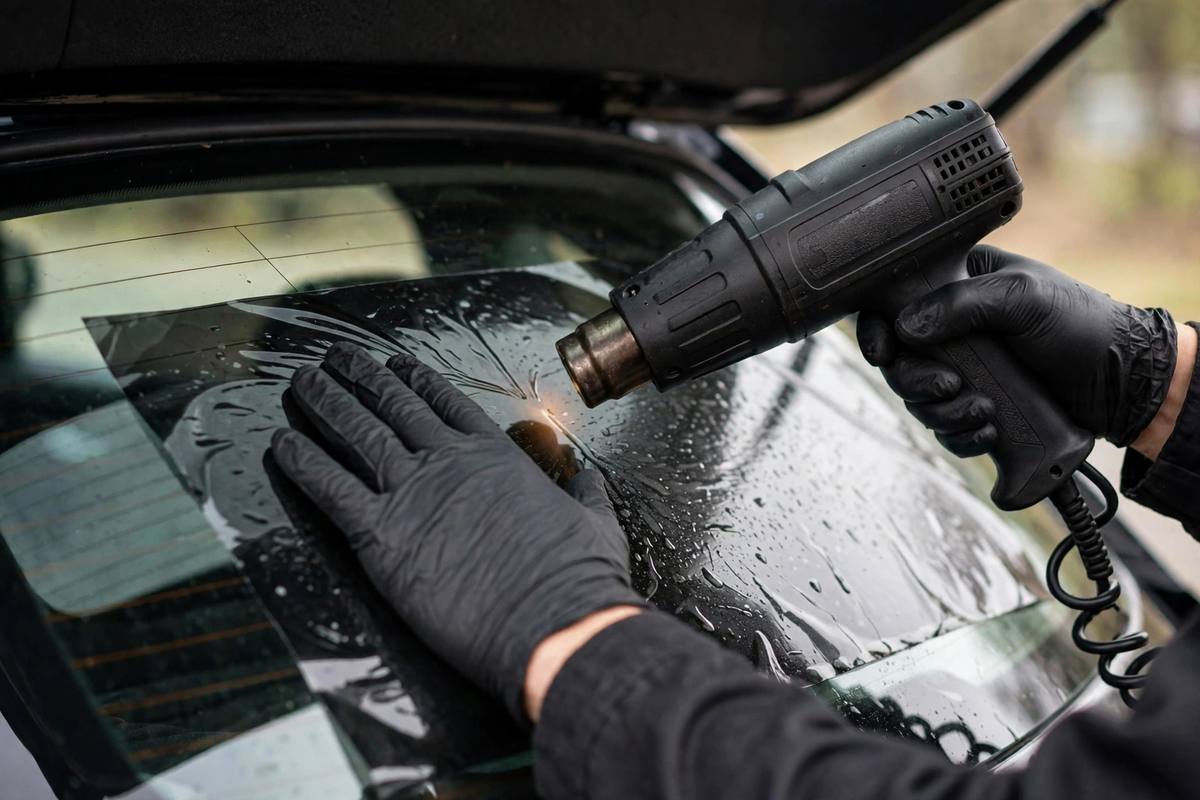
Technician heat-shrinking film on curved rear glass, heat gun and gloved hands

Why owners and drivers ask about ceramic film

Ceramic film is asked about for heat feel, for glare, for color stability, and for signal questions, in roughly that order. For more background, see the Jeffersonville service-area page and the post on ceramic versus carbon window tint and which is worth it.

  • Heat feel, first and foremost

    Ceramic film is the premium tier on the heat you feel through glass. The discussion stays qualitative here: ask what it would mean for your vehicle or rooms, rather than taking any figure on trust.

  • Color stability over time

    Film that holds its color is worth more than film that looks good only at first. Ceramic film is the tier discussed when past film has shifted color and the owner does not want a repeat.

  • Glare relief without heaviness

    Glare can be eased without making glass look heavy. Ceramic film lets shade and heat behavior be weighed apart, which matters on glass where a dark look is not wanted.

  • No metal layer

    Ceramic film has no metal layer, which is why it is the tier discussed when questions arise about phones, navigation, and toll devices. Raise the question on the call if it applies to you.

What the public listing shows

Listing facts

  • Window tinting service — the only category on the Google listing
  • 1107 Reeds Ln, Jeffersonville — IN 47130, address shown on the listing
  • Tuesday–Saturday — 9 AM to 5 PM, closed Monday and Sunday
  • 4.8 stars from 345 reviews — the Google aggregate rating
  • Phone: (812) 382-2757 — the number to call during shop hours

Review breakdown

Google reviews ★★★★★4.8

The Google listing shows 4.8 stars across 345 reviews. Three five-star reviews are quoted in full further down this page, exactly as Google shows them.

Five-star reviews ★★★★★322

Of the 345 reviews, 322 are five-star. The remaining 23 reviews carry the rest of the spread, and all of them count toward the 4.8 average.

All other ratings —23

Three four-star, four three-star, six two-star, and ten one-star reviews make up the remaining 23. The full spread is shown here, not just the top end.

Reviews quoted here ★★★★★3

Three five-star Google reviews appear on this page, quoted word for word with the reviewer's name and the date Google shows. No review text has been edited.

Talk through ceramic film with the shop

Ceramic film is a premium-tier choice, and premium choices deserve a conversation. Call Doyles Window Tinting at (812) 382-2757 during shop hours, Tuesday through Saturday, 9 AM to 5 PM, from the shop at 1107 Reeds Ln in Jeffersonville. Ask what ceramic film would mean for your glass, how it compares with carbon and dyed film, and what pricing looks like for your situation. The Google listing shows 4.8 stars from 345 reviews.

  • Premium film tier, discussed without figures or promises
  • Shop at 1107 Reeds Ln, Jeffersonville, IN 47130
  • Open Tuesday–Saturday, 9 AM–5 PM; closed Monday and Sunday
  • Phone: (812) 382-2757
  • Google rating: 4.8 stars from 345 reviews
Call (812) 382-2757
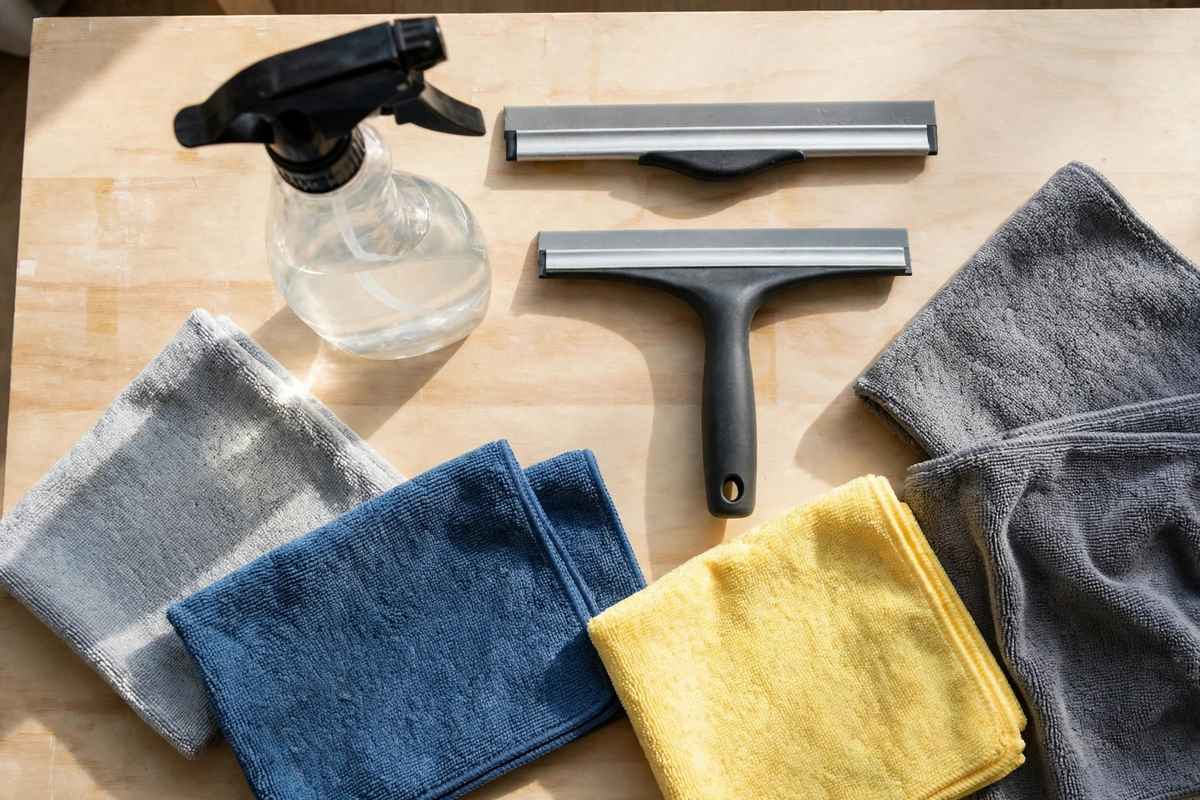
Spray bottle, squeegees, and microfiber cloths on a clean workbench, top-down view

What customers say on Google

Three five-star Google reviews, quoted word for word. One of them speaks directly about ceramic tint, in the reviewer's own words.

“Doyle’s is the only place I take my vehicles to for tint. They do excellent work and have great prices. They stand behind their lifetime warranty no questions asked. The new ceramic tint is amazing. It keeps the inside of my vehicle’s cooler in the summer sun. The ceramic is definitely worth the extra money. If you’re looking for a trustworthy place that does excellent work then Doyle’s is the place for you.”

M

Michael Osborne

5 stars · 9 months ago · Google review

“This is the place to go for your tinting needs!! Everybody was super nice and very welcoming!! The tint came out perfect!! They also did the tint on my windshield! It looks amazing!! I love it!! Thanks Doyle’s for a great experience!!”

C

candice january

Local Guide · 5 stars · 2 months ago · Google review

“If you're looking for reliable friendly service and extraordinary quality, then you have to go to Doyle's! I've taken 4 cars to him now and every time was an amazing experience. No bubbles or light gaps like I've had in the past from another other local shop. Can't say enough good things about Doyle's Window Tinting!”

M

Meghan Vest

5 stars · a month ago · Google review

Ceramic tint questions, answered plainly

Plain answers, with the limits stated. Anything about a specific vehicle, room, or price is a question for the call.

Is ceramic tint the same as ceramic coating?
No. Ceramic tint is window film. Ceramic coating is a different product for paint, and the two share a word and nothing else. This page is about window film only, and coating is not part of the window-film work described here. If coating is what you are asking about, say so on the call so the conversation starts in the right place.
Is ceramic film worth it over carbon film?
It depends on what matters most: heat feel, glare, color stability, and how the glass is used. Ceramic is the premium tier and carbon sits in the middle, and the honest answer weighs your situation rather than assuming the top tier. The post on ceramic versus carbon window tint and which is worth it lays out the comparison in more detail.
How much does ceramic tint cost?
This site does not publish prices. Ceramic is the premium tier: its quote turns on the heat and glare brief, the amount of glass covered, and any old film to remove. Call (812) 382-2757 during shop hours and describe your vehicle or rooms.
How should ceramic tint be cared for?
Care questions belong on the call, before the work is settled: cleaning, curing, and what to watch for early on. The post on how to care for ceramic tint so it lasts longer gives background, and the shop can answer for your specific glass.

Call about ceramic window tinting in Jeffersonville

Call (812) 382-2757 during shop hours, Tuesday through Saturday, 9 AM to 5 PM, and ask what ceramic film would mean for your glass. Say whether the glass is on a vehicle, in a home, or in a commercial building, and ask about pricing. The shop is closed Monday and Sunday.

Call (812) 382-2757 Contact the shop

Contact Doyles Window Tinting

Call (812) 382-2757 to ask about ceramic film, or to ask whether ceramic, carbon, or dyed film fits your glass. The phone is the contact channel listed here. Mention the glass, the exposure, and any old film, and ask about pricing and the next step during shop hours.

Doyles Window Tinting


  • Address

    1107 Reeds Ln, Jeffersonville, IN 47130

  • Hours

    Monday: Closed
    Tuesday–Saturday: 9 AM–5 PM
    Sunday: Closed
    Call during shop hours

Call (812) 382-2757 Get Quote
Call Quote