
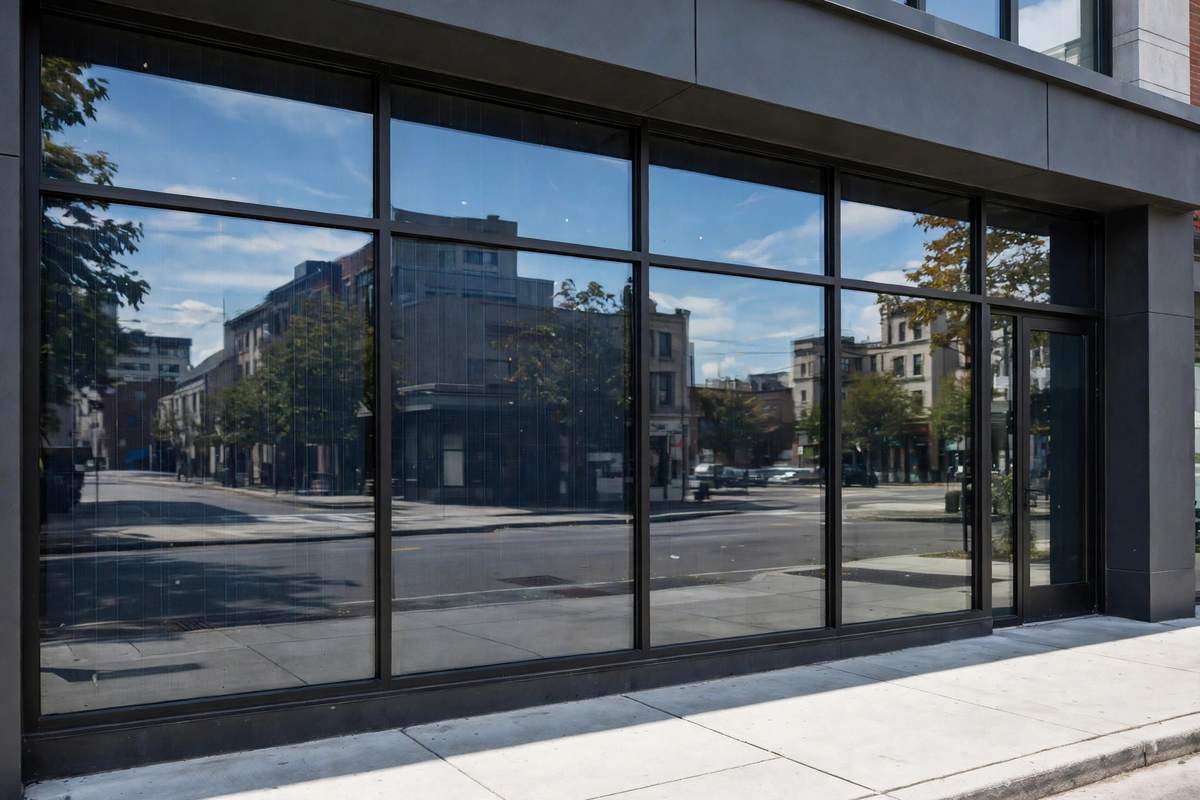
Office glass and partitions
Offices raise glare, privacy, and comfort questions: screens washed out by sun, meeting rooms that need privacy, and work areas that run hot. Partitions and conference-room glass are part of the same conversation.
Commercial glass is discussed building by building: what the building is, what the glass faces, and who else has a say in what goes on it. The five topics below shape most calls about commercial film.
Offices raise glare, privacy, and comfort questions: screens washed out by sun, meeting rooms that need privacy, and work areas that run hot. Partitions and conference-room glass are part of the same conversation.
Storefronts raise glare, fading, and heat questions at the front of the shop, where displays sit and customers stand. Street-facing glass in older areas raises review questions alongside film questions.
Commercial glass rarely raises one problem alone. Glare, heat, and fading arrive together on the same panes, and the conversation weighs them together, in qualitative terms and without figures.
Meeting rooms, offices, and work areas need varying levels of privacy at varying hours. Frosted and decorative options are part of that conversation, covered on their own pages.
Landlords, franchise or brand standards, and historic-district review can all have a say in commercial glass. Approval questions belong at the start of the conversation, framed as questions with verification paths.
Commercial window tinting means applying film to the glass of a commercial building to change how heat, glare, and light behave inside it, how much fades, and how much privacy work areas have. Offices and storefronts are the two settings this page covers, as sections rather than as separate pages: offices bring screens, partitions, and meeting rooms; storefronts bring display glass, customer areas, and street-facing facades. Restaurants with glass frontage raise the same questions as other storefronts. Schools, churches, and medical offices sometimes ask about film as well, and they are mentioned here only in that brief, qualified way: no segment is claimed, and each building's questions are its own. The conversation for any commercial building starts with the glass, the exposure, and who else has a say.
Jeffersonville's commercial glass concentrates along three corridors. Veterans Parkway and the Town Center area form the primary retail growth corridor, with office, retail, restaurant, and medical glass. East 10th Street is the primary east-west arterial, with storefront, office, and medical frontage. Downtown and Spring Street hold a nineteenth-century commercial streetscape with flush-to-sidewalk storefront glass, where historic storefront-guideline review uncertainty applies and must be stated as a question, not assumed away. Film carrying lettering or graphics raises a further question about the city's window-sign rules, covered in the questions below. Call (812) 382-2757 during shop hours, Tuesday through Saturday, 9 AM to 5 PM, and ask about pricing for your building and glass.
Commercial film starts with the building and the approvals, not with the film. The steps below follow that order.
Call the shop
Call (812) 382-2757 during shop hours, Tuesday through Saturday, 9 AM to 5 PM. The shop is closed Monday and Sunday. Say you are asking about commercial glass.
Describe the building and glass
What the building is, where the glass faces, how much sun it takes, and what sits behind it. Displays, screens, and work areas each change the conversation.
Work through film and approval questions
Film tier and coverage, alongside landlord, brand-standard, and review questions. Ask about pricing for your building and glass on the same call.
Plan the next step
Ask what the next step looks like for commercial glass, what information the shop needs, and what care questions to raise before anything is settled.
Surveying the glass
Which panes, which directions, how much sun, and what sits behind each pane. A good description of the building and its glass is the foundation of the conversation.
Direction and exposure
Street-facing and west-facing glass take the hardest sun. Direction decides which panes the conversation centers on, in offices and storefronts alike.
Glass type and condition
Large display panes, office glazing, and older storefront glass each raise different questions. Type, age, and condition belong in the conversation.
What sits behind the glass
Displays, screens, seating, and work areas each change what the film is for. Say what is behind the glass when you call.
Looking the work over
Clarity, consistency across panes, and the state of the edges are what to look at when work is finished. Ask what to look for.
Who else has a say
Landlords, franchise or brand standards, and review bodies can all affect commercial glass. Ask who needs to be consulted before film is discussed further.
What the film is for, pane by pane
Glare, heat, fading, and privacy weigh differently on different panes. Naming the purpose pane by pane keeps the conversation honest.
What street-facing glass raises
Facades in older areas raise review questions. Frame them as questions with verification paths, starting with the Building Commissioner's office.
What care looks like
Cleaning and curing questions belong before the work. Ask, and note the answers, rather than guessing afterward.
01
What to ask: West-facing office glass makes screens unreadable and work areas uncomfortable at the same hours each day. The conversation covers which panes, which hours, and what film is discussed for in that setting.
→ Direction and hours set the terms, not the size of the office.
02
What to ask: Street-facing display glass takes full sun, and what sits in the window fades. The conversation covers glare, fading, and heat at the front of the shop, plus any review questions the facade raises.
→ Displays, glare, and review questions are talked through together.
03
What to ask: Conference rooms and offices need privacy that varies by use and by hour. The conversation covers frosted and decorative options, and the light-balance point that governs how privacy behaves.
→ Privacy is discussed by room and by hour, not building-wide.
04
What to ask: Leased space and franchise or brand settings often carry standards for glass. The conversation starts with who needs to approve what, before film type is discussed at all.
→ Approvals come first, film second.
Commercial film follows the corridors where commercial glass actually sits. The topics below follow Veterans Parkway, East 10th Street, and downtown, and the questions each corridor raises.
Veterans Parkway and Town Center
The primary retail growth corridor, with office, retail, restaurant, and medical glass. Large panes, strong sun, and mixed uses make exposure the first question.
East 10th Street frontage
The primary east-west arterial, with storefront, office, and medical frontage. Glass along the arterial takes sun and traffic glare together.
Downtown and Spring Street storefronts
Nineteenth-century streetscape with flush-to-sidewalk storefront glass. Historic storefront-guideline review uncertainty applies here, stated as a question.
Office glass and partitions
Screens, meeting rooms, and work areas. Office film is discussed as a section of this page, covering glare, privacy, and comfort together.
Storefront and retail glass
Display glass, customer areas, and facades. Storefront film is discussed as a section of this page, covering glare, fading, and heat together.
Spring Street review questions
Whether film on a Spring Street storefront facade needs historic review is a question, not an answer on this page. Questions about review go to the Building Commissioner's office.
Window-sign coverage
If film will carry lettering or graphics, ask whether the city's window-sign rules treat it as a sign. The question is covered in the questions section below, with a link to follow.
Landlord and brand standards
Leased and franchise settings often carry standards for glass. What those standards say is a question for the lease and the brand documents.
Glass type in older buildings
Older commercial glass raises the same type and condition questions as older home glass. Ask about the glass before assuming any film suits it.
Commercial film is discussed for problems that cost comfort, visibility, and the condition of what sits behind the glass. The four below come up most.
Problem
Sun through office glass washes out screens and makes work areas uncomfortable at the same hours each day. The conversation starts with which panes and which hours.
What to discuss
Direction, hours, and what sits behind the glass, and how film is weighed for those panes.
Problem
Street-facing glass lets heat build where customers stand and staff work. Film is discussed as one part of the conversation about that heat, in qualitative terms.
What to discuss
Which panes take the sun, what the front of the shop is used for, and what film tier fits the exposure.
Problem
Sun exposure fades displays, furnishings, and finishes near the glass. Film is part of the conversation about slowing fading, not a promise about it.
What to discuss
What is fading, which glass lets the sun in, and what film is discussed for in that setting.
Problem
Meeting rooms and offices need privacy that changes by use and by hour. The light-balance point governs how privacy behaves, and it is stated plainly on the privacy page.
What to discuss
Which rooms, which hours, and what level of privacy is wanted, with frosted and decorative options in the conversation.
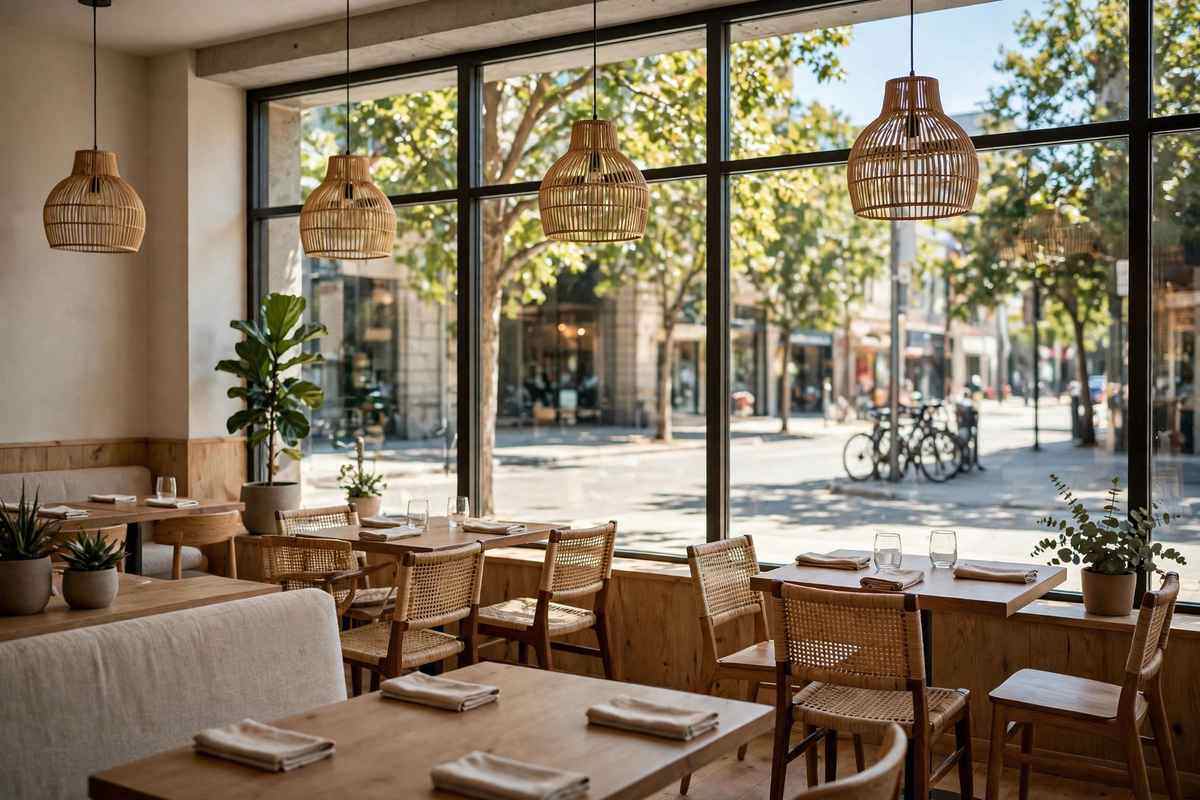
Businesses ask about film for glare, for heat, for fading, and for privacy, usually several at once on the same glass. For more background, see the Jeffersonville service-area page and the post on whether security window film is worth it for storefronts in Jeffersonville.
Work areas people can use
Screens that can be read and seating that can be sat in are the basic test of office and storefront glass. Film is discussed as one way toward that test.
Displays that last longer
What sits in a display window fades under sun. Film is part of the conversation about slowing that fading, alongside how displays are arranged and rotated.
Comfort at the front of the shop
Heat at street-facing glass affects customers and staff alike. Film is weighed for the panes where heat builds, in qualitative terms.
Privacy where work needs it
Meeting rooms, offices, and sensitive work areas need privacy that fits their use. Frosted and decorative film options are part of that conversation.
Google reviews ★★★★★4.8
The Google listing shows 4.8 stars across 345 reviews. Three five-star reviews are quoted in full further down this page, exactly as Google shows them.
Five-star reviews ★★★★★322
Of the 345 reviews, 322 are five-star. The remaining 23 reviews carry the rest of the spread.
All other ratings —23
Three four-star, four three-star, six two-star, and ten one-star reviews make up the remaining 23. The full spread counts toward the 4.8 average.
Reviews quoted here ★★★★★3
Three reviews are quoted on this page, word for word, with the reviewer's name and the date Google shows. No review text has been edited.
Commercial film is a building-by-building conversation, and it starts with a call. Call Doyles Window Tinting at (812) 382-2757, Tuesday through Saturday, 9 AM to 5 PM, from the shop at 1107 Reeds Ln in Jeffersonville. Describe the building, the glass, and who else has a say, and ask about film, pricing, and approval questions. The Google listing shows 4.8 stars from 345 reviews.
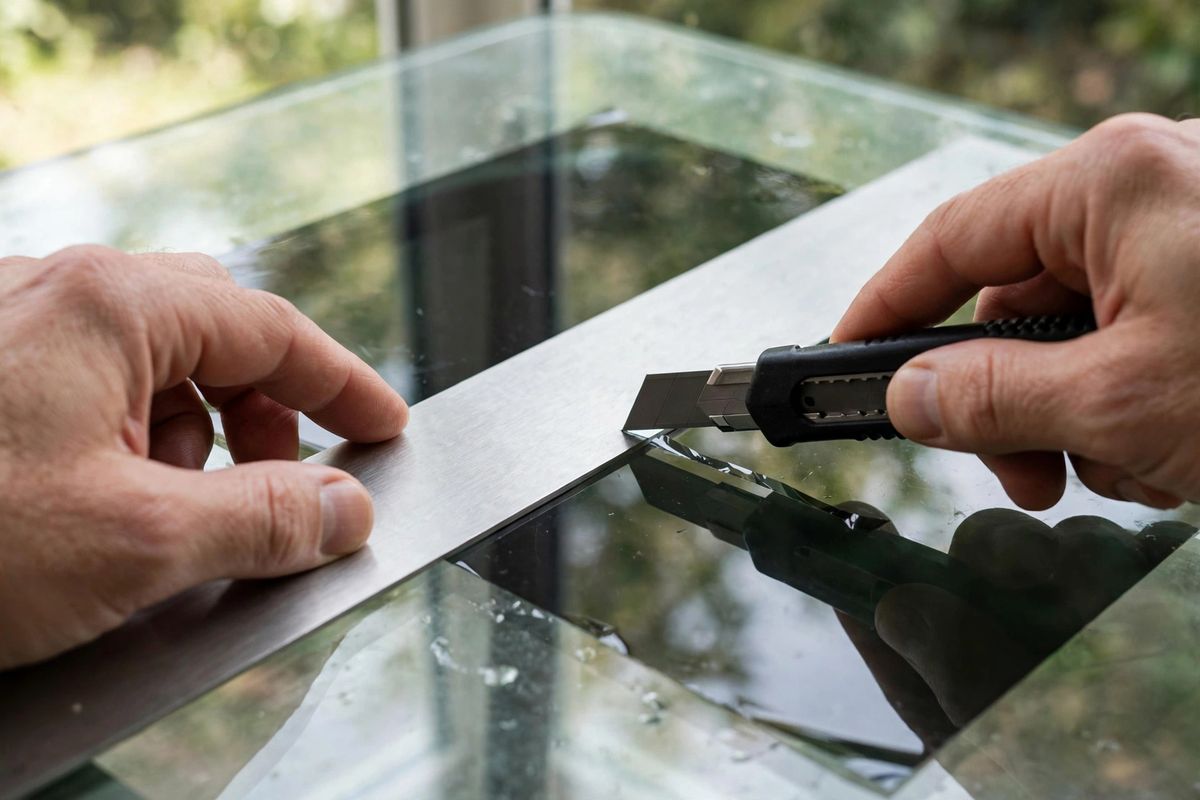
Three five-star Google reviews, quoted word for word, with the name and date Google shows. The shop's overall rating is 4.8 stars from 345 reviews.
“Doyle’s is the only place I take my vehicles to for tint. They do excellent work and have great prices. They stand behind their lifetime warranty no questions asked. The new ceramic tint is amazing. It keeps the inside of my vehicle’s cooler in the summer sun. The ceramic is definitely worth the extra money. If you’re looking for a trustworthy place that does excellent work then Doyle’s is the place for you.”
Michael Osborne
5 stars · 9 months ago · Google review
“If you're looking for reliable friendly service and extraordinary quality, then you have to go to Doyle's! I've taken 4 cars to him now and every time was an amazing experience. No bubbles or light gaps like I've had in the past from another other local shop. Can't say enough good things about Doyle's Window Tinting!”
Meghan Vest
5 stars · a month ago · Google review
“Amazing price and great service! Doyles has done every vehicle I own and even did the windshield on the can am x3. Best in the business!”
Chris Nalley
5 stars · 2 months ago · Google review
Plain answers, with the limits stated. Anything about a specific building, lease, or price is a question for the call.
The head page for vehicle film, including work vehicles: vehicle types, coverage, windshield questions, and removal and re-tint.
View Automotive Window TintingFilm for home glass, with housing-era framing and the historic-home and association questions that need asking.
View Residential Window TintingFrosted, patterned, gradient, and etched-look film for privacy and style, including frosted film as a core topic for offices and storefronts.
View Decorative Window FilmFilm discussed for privacy at work and at home, including the honest point that privacy depends on which side of the glass is brighter.
View Privacy Window FilmFilm discussed in general, qualified terms for how glass behaves if it breaks, framed as a discussion topic for a call or visit.
View Security Window FilmFilm for work vehicles, discussed in qualified terms, with the questions that shape a conversation about vehicles used for work.
View Fleet Window TintingCall (812) 382-2757 to ask about film for your building, or to ask any approval question this page raised. The phone is the contact channel listed here. Mention the building, the glass, and the tenancy, and ask about pricing and the next step during shop hours.
Phone
(812) 382-2757Address
1107 Reeds Ln, Jeffersonville, IN 47130
Hours
Monday: Closed
Tuesday–Saturday: 9 AM–5 PM
Sunday: Closed
Call during shop hours