
Privacy and look
Dyed film darkens glass and changes how much can be seen into a vehicle or a room. For drivers and owners whose main concern is privacy and appearance, that is often the whole of the requirement.
Dyed film is discussed honestly on this page: its strengths first, then the color-stability question that defines it. No tier is right for every situation, and the entry tier is no exception.
Dyed film darkens glass and changes how much can be seen into a vehicle or a room. For drivers and owners whose main concern is privacy and appearance, that is often the whole of the requirement.
Dyed film eases glare on the windows where sun hits hardest. Glare relief is one of the tier's genuine strengths, and it is worth weighing on its own, apart from heat feel.
Dyed film can shift color over time under sun and heat, turning purple or hazy. This is the honest discussion point for the tier, and it is stated here rather than softened: ask about it directly on the call.
Dyed film addresses the heat you feel through glass less than carbon or ceramic film. A dark look does not mean the heat felt has changed, and the tier choice should not be made on looks alone.
Dyed film fits where privacy and look matter most, where the glass is shaded much of the day, or where the owner understands the color trade-off and accepts it. The call is where that fit is weighed.
Dyed window film is film whose color comes from dye in the film layer, and it sits at the entry end of the film range: below carbon film in the middle and ceramic film at the premium end. The entry position is not a defect; it is a description. Dyed film does real work on privacy and glare, and for some vehicles and some rooms that work is all that is needed. But the research behind this site is clear about the honest discussion point for this tier: color stability. Dyed film can shift toward purple and lose clarity over time under sun and heat, and Jeffersonville's long, hot, humid summers are exactly the conditions under which that question matters. Nothing on this page hides that, and nothing here presents dyed film as something it is not.
The removal conversation belongs on this page too, because dyed film that has aged is the film most often removed. The removal and re-tint discussion lives on the automotive window tinting page, and it covers what happens when old film comes off and the glass is checked before new film goes on. Indiana and Kentucky window tint rules differ, so drivers whose routines cross the Ohio River should read the Indiana–Kentucky tint law guide before choosing film for a vehicle. Call Doyles Window Tinting at (812) 382-2757 during shop hours, Tuesday through Saturday, 9 AM to 5 PM, and ask about pricing and about whether the entry tier fits your glass.
The entry tier deserves the same honest conversation as the premium tier. The steps below keep the color question in the open from the start.
Call the shop
Call (812) 382-2757 during shop hours, Tuesday through Saturday, 9 AM to 5 PM. The shop is closed Monday and Sunday. Say what glass you are asking about.
Say what the glass is doing now
Whether the glass is bare, carries old film, or has film that has shifted color already. What is on the glass now shapes the whole conversation.
Weigh entry-tier trade-offs
Privacy and glare on one side, color stability and heat feel on the other. Ask how dyed film compares with carbon film for your situation, and ask about pricing.
Plan around shop hours
Vehicle work happens at the shop at 1107 Reeds Ln. For building glass, ask what the next step looks like, and raise care questions before anything is settled.
Glass preparation
Film shows what is under it, so the glass is cleaned and checked first. Old adhesive and residue matter, and so does the condition of the glass itself.
Fit to each window
Film is shaped to each window it covers. Curved vehicle glass and flat building panes raise different fit questions, and both are worth asking about.
Curved glass
Rear vehicle glass curves in more than one direction, and film has to follow the curve without creasing or lifting at the edges.
Edges and corners
Edges are where film meets the frame and where lifting starts. A slow look at edges and corners in good light is a reasonable part of finishing.
Looking it over
Clarity, consistency from window to window, and the state of the edges are what to look at before leaving. Ask what to look for.
Old film first, where it exists
Where old film is failing, removal and cleaning come before new film. Ask how removal is handled and how the glass is checked afterward.
Care questions
Cleaning and curing questions belong before the work, not after. Ask, and note the answers, rather than guessing later.
Privacy against color over time
Dyed film's strength is privacy and look; its question is color over time. The honest conversation weighs the two together for your glass and your use.
Glare against heat feel
Dyed film eases glare more than it addresses the heat you feel. If heat dominates your complaint, the conversation should turn to carbon or ceramic film.
Dyed against carbon
Carbon film sits above dyed film on color stability and heat feel. Ask what the step up would mean for your situation, and what it would change.
When to step up a tier
Past film that shifted color, glass in full sun all day, and heat as the main complaint are all reasons the conversation turns to a higher tier.
01
What to ask: Privacy for a parked vehicle, and a consistent darker look across the glass, are the requirements dyed film meets most directly. The conversation covers shade, coverage, and the color question, stated plainly.
→ Privacy and look lead; the color question stays in the open.
02
What to ask: Garage-kept vehicles and shaded rooms put less sun stress on film. The conversation covers how much sun the glass actually takes, since exposure decides how much the color question matters.
→ Exposure decides how much weight the color question carries.
03
What to ask: Purple or hazy film is the entry tier's story told by experience. The conversation covers removal, the glass underneath, and whether dyed film is the right choice again or whether a higher tier fits better.
→ Past behavior is the best guide to the next choice.
04
What to ask: A single window, or front windows matched to factory-tinted rear glass, can be a modest first step. The conversation covers coverage, consistency, and the trade-offs of the entry tier at that scope.
→ Small scope still deserves the full trade-off conversation.
Jeffersonville's summers test film color. Long, hot, humid months with strong sun are the conditions under which dyed film's color question matters most, and this page does not soften that point.
Privacy-first vehicle jobs
Drivers whose main concern is how much can be seen into a parked vehicle. Shade and coverage are the conversation, with the color question stated alongside.
Shaded and garage-kept vehicles
Vehicles that spend much of the day out of direct sun put less stress on film color. Exposure is the deciding fact, and it is worth stating on the call.
Rooms with moderate sun
Home glass that takes sun for part of the day rather than all of it. Direction and hours of sun matter more than the size of the room.
Single-window and partial jobs
One window, or front windows matched to rear glass. Small scope, same honest conversation about what the tier does and does not do.
Re-tint after old film fails
Where old film has shifted color or bubbled, the re-tint conversation starts with removal and asks whether the entry tier is right again.
Sun and heat, for months at a time
Jeffersonville summers are long and hot, and film color is tested across the whole season, not on a single day. That is the honest frame for dyed film here.
Humidity in the air
Humid air is part of every Jeffersonville summer. Curing and care questions are worth raising on the call, in general terms.
River glare on the commute
Reflected light off the Ohio River and wet pavement adds glare to river crossings. Dyed film's glare relief is part of that conversation.
Old film on older vehicles
Older vehicles often carry film from earlier work, sometimes dyed film that has already shifted. What is on the glass now shapes the next choice.
This section states the entry tier's problems without softening them. An honest page about dyed film is mostly about what to watch for.
Problem
Dyed film can turn purple or hazy over time under sun and heat. It is the tier's defining question, and it is worse on glass that takes full sun all day.
What to discuss
Whether dyed film fits your exposure, what carbon film would add, and what removal and re-tint would involve if color shifts later.
Problem
Film that has lost clarity makes the view through the glass worse, especially at night. Haze is a sign the film has aged past its best.
What to discuss
Removal and the glass underneath, and which tier fits better next time, given how the glass is used.
Problem
A dark look from dyed film does not mean the heat felt through the glass has changed much. Shade and heat feel are separate questions, and the tier choice is where they part.
What to discuss
Whether heat feel is the main complaint, and if so, whether carbon or ceramic film belongs in the conversation instead.
Problem
Bubbles and lifting edges point to preparation, contamination, or film that has aged. Once lifting starts, it tends to spread across the window.
What to discuss
How removal is handled, how the glass is prepared, and what to look for at the edges when new film goes on.
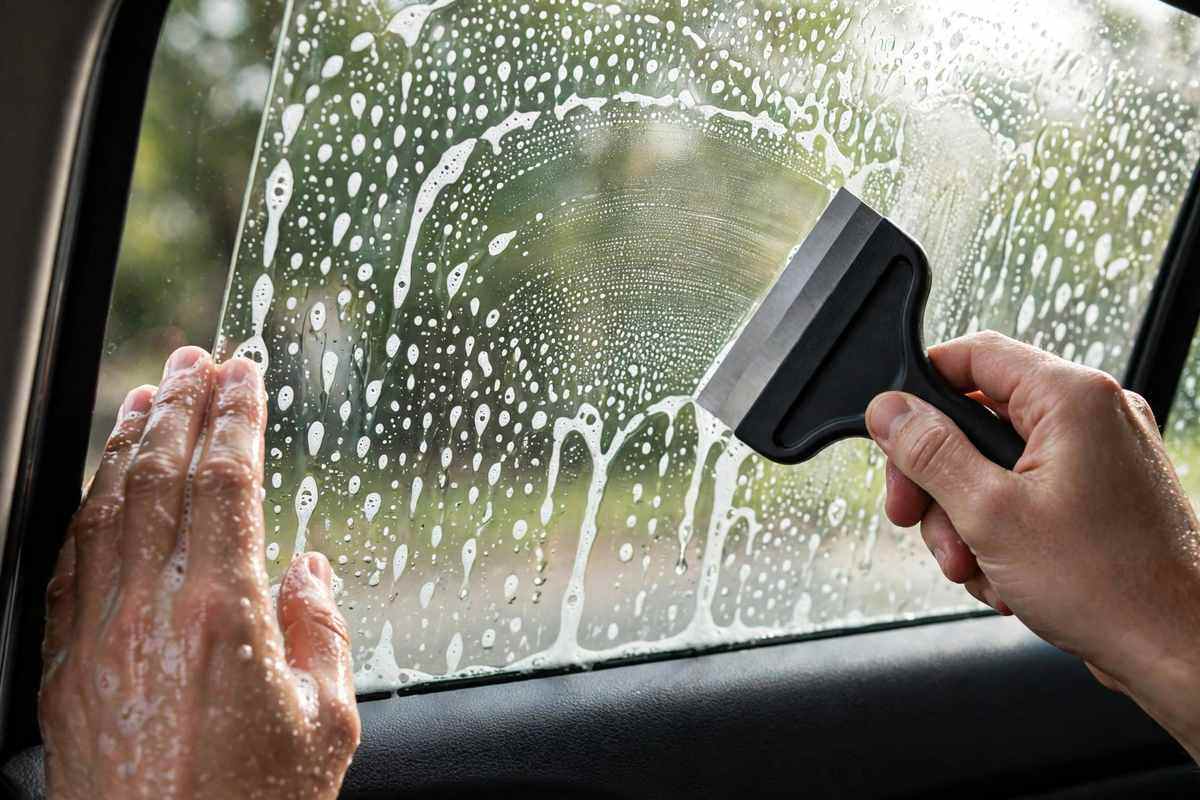
Dyed film is asked about for privacy, for look, and for glare, and the color question travels with it everywhere. For more background, see the Jeffersonville service-area page and the post on why car tint turns purple or bubbles.
Privacy at the entry tier
Dyed film changes how much can be seen into a vehicle or a room, and that is often the whole requirement. Shade and coverage are the conversation.
A darker look, simply
Some owners want the look and nothing more. Dyed film delivers the look, and the honest conversation adds the color question alongside it.
Glare relief that is real
Glare eased on the windows where sun hits is a genuine strength of the tier. It is worth weighing on its own, apart from heat feel.
The color question, in the open
No honest dyed film page hides the color question. It is stated here, in the comparisons, and on the call, so the choice is made with eyes open.
Google reviews ★★★★★4.8
The Google listing shows 4.8 stars across 345 reviews. Three five-star reviews are quoted word for word further down this page.
Five-star reviews ★★★★★322
Of the 345 reviews, 322 are five-star. The other 23 reviews are spread across the lower ratings, and all of them count toward the average.
All other ratings —23
Three four-star, four three-star, six two-star, and ten one-star reviews. The full spread is stated here rather than left out.
Reviews quoted here ★★★★★3
Three reviews are quoted on this page, word for word, with the reviewer's name and the date Google shows. No review text has been edited.
Dyed film is an entry-tier choice, and entry-tier choices deserve the same honesty as premium ones. Call Doyles Window Tinting at (812) 382-2757, Tuesday through Saturday, 9 AM to 5 PM, from the shop at 1107 Reeds Ln in Jeffersonville. Ask whether dyed film fits your glass, how it compares with carbon film, and what pricing looks like for your situation. The Google listing shows 4.8 stars from 345 reviews.
Three five-star Google reviews, quoted word for word, with the name and date Google shows. The shop's overall rating is 4.8 stars from 345 reviews.
“If you're looking for reliable friendly service and extraordinary quality, then you have to go to Doyle's! I've taken 4 cars to him now and every time was an amazing experience. No bubbles or light gaps like I've had in the past from another other local shop. Can't say enough good things about Doyle's Window Tinting!”
Meghan Vest
5 stars · a month ago · Google review
“This is the place to go for your tinting needs!! Everybody was super nice and very welcoming!! The tint came out perfect!! They also did the tint on my windshield! It looks amazing!! I love it!! Thanks Doyle’s for a great experience!!”
candice january
Local Guide · 5 stars · 2 months ago · Google review
“Amazing price and great service! Doyles has done every vehicle I own and even did the windshield on the can am x3. Best in the business!”
Chris Nalley
5 stars · 2 months ago · Google review
Plain answers, with the limits stated. Anything about a specific vehicle, room, or price is a question for the call.
The head page for vehicle film, including the removal and re-tint discussion that matters most when dyed film has aged. Vehicle types, coverage, and windshield questions are covered there.
View Automotive Window TintingThe premium film tier, discussed for heat feel and glare. This page explains what ceramic film is, what it is not, and how it compares with carbon and dyed film.
View Ceramic Window TintingThe middle film tier, and the usual step up from dyed film. This page sets out where carbon film fits and what it adds on color stability and heat feel.
View Carbon Window TintingFilm for home glass: heat, glare, fading, and privacy, with housing-era framing and the historic-home and association questions that need asking.
View Residential Window TintingFilm discussed for privacy at home and at work, including the honest point that privacy depends on which side of the glass is brighter.
View Privacy Window FilmFilm for work vehicles, discussed in qualified terms, with the questions that shape a conversation about vehicles used for work.
View Fleet Window TintingCall (812) 382-2757 to ask about dyed film, or to compare dyed, carbon, and ceramic film for your glass. The phone is the contact channel listed here. Mention the glass, the sun it takes, and any old film, and ask about pricing and the next step during shop hours.
Phone
(812) 382-2757Address
1107 Reeds Ln, Jeffersonville, IN 47130
Hours
Monday: Closed
Tuesday–Saturday: 9 AM–5 PM
Sunday: Closed
Call during shop hours