Doyles Window Tinting
Get Estimate

Privacy Window Film in Jeffersonville, IN

Privacy for home and office glass, honestly stated.


Privacy window film changes how much can be seen through glass, at home and at work. This page states the honest point first: privacy through film depends on light balance, on which side of the glass is brighter, and no film gives one-way privacy in both directions at all hours. With that stated, the page works through daytime privacy, reflective questions, frosted options, and the rooms where privacy matters most. Doyles Window Tinting is at 1107 Reeds Ln, open Tuesday through Saturday, 9 AM to 5 PM.

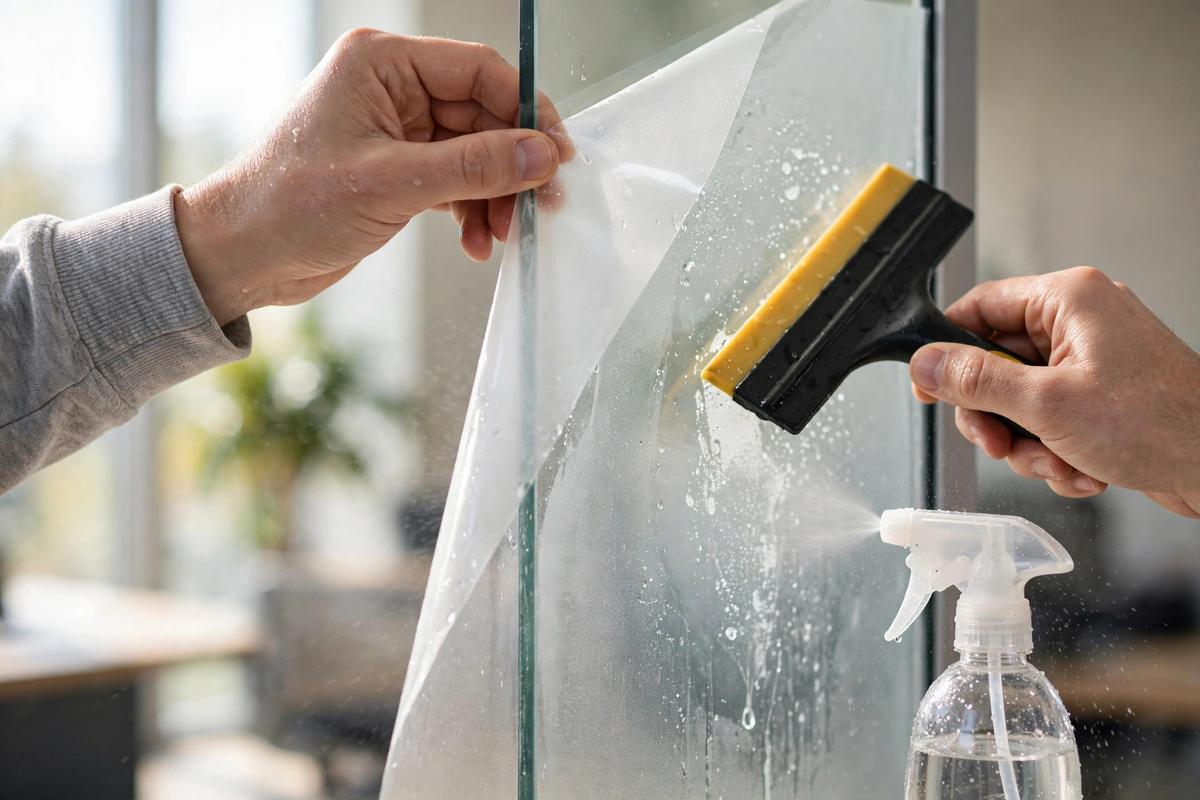
Close-up of hands applying frosted film to a glass office door, squeegee and spray bottle
345 reviews 4.8-star Google average
Closed Monday and Sunday
Open Tuesday–Saturday, 9–5
Call (812) 382-2757

What privacy film conversations cover

Privacy is discussed pane by pane and hour by hour, because the same pane behaves differently at noon and at night. The five topics below are the honest shape of the privacy conversation.

The light-balance point

Privacy through film depends on which side of the glass is brighter. In daylight, the brighter outside is harder to see through from outside; at night, with lights on inside, the balance reverses. This page states that plainly, because it decides what privacy film can and cannot do.

Daytime privacy

Daytime privacy is the strongest case for privacy film: bright outside, dimmer inside, and the view inward softened. Street-facing glass and glass close to neighbors are the usual daytime cases.

Reflective questions

Reflective film raises questions about look, about glare for neighbors and drivers, and about how the facade reads from the street. Reflective options are discussed as questions, including whether the look suits the building.

Frosted privacy

Frosted film gives privacy that does not depend on light balance in the same way, by softening the view in both directions while keeping light. Bathrooms, entries, and partitions are the usual frosted cases.

Privacy by room and hour

Bedrooms, bathrooms, meeting rooms, and street-facing rooms each need privacy at different hours and to different degrees. Naming the room and the hours is the starting point.

What privacy window film is, in plain terms


Privacy window film is film applied to glass to reduce how much can be seen through it. The honest account starts with light: film that darkens or reflects the view works with the brighter side, so daytime privacy from outside is strong while the sun is up, and the balance shifts at night when interior lights are on and the outside is dark. Anyone promising one-way privacy that holds in both directions at all hours is promising something film does not do, and this page does not make that promise. What film does offer is real: softened views inward during the day, frosted obscuring that holds regardless of hour, and reflective options whose look and behavior are worth discussing before choosing. The choice among them depends on the room, the hours, and which side the view comes from.

At home, privacy film comes up for street-facing glass, for bathrooms and bedrooms, and for glass close to neighboring homes. At work, it comes up for meeting rooms, offices, and partitions where visual separation matters. Older homes with original sash raise glass-type questions, and street-facing facades in older areas raise review questions that belong at the start, with the Building Commissioner's office as the verification path. Association documents raise their own questions for some homes, and the documents themselves are the place to check, since no association's window-film rule has been verified. Call (812) 382-2757 during shop hours, Tuesday through Saturday, 9 AM to 5 PM, and ask about pricing for your glass.

How a privacy film conversation runs

Privacy starts with who sees in, from where, and when. The steps below follow the view, the hours, and the level of privacy wanted.

01

Call the shop

Call (812) 382-2757 during shop hours, Tuesday through Saturday, 9 AM to 5 PM. The shop is closed Monday and Sunday. Say you are asking about privacy film.

02

Describe who sees in, and when

Which panes, viewed from where, at what hours. Street, sidewalk, neighboring homes, and interior corridors each raise different privacy questions.

03

Settle the privacy approach

Daytime film, reflective options, or frosted obscuring, weighed against the light-balance point. Ask about pricing for your panes on the same call.

04

Plan the next step

Ask what the shop needs to know about each room — which panes, which hours, how much obscuring — and what to settle about the light-balance point before anything is decided.

How privacy film work is talked about

What the work involves, in general terms

Describing the view

Which panes, viewed from where, and at what hours. The view to be softened is the first fact, and it decides which privacy approach is discussed.

Light on both sides

How bright each side is, by hour. The light-balance point is not a footnote: it decides when privacy film works hardest and when it does not.

Glass type and condition

Pane sizes, glass type, and what is already on the glass. Older sash and special glass raise questions that belong in the conversation.

Level of obscuring

Softened view, strong daytime privacy, or frosted obscuring. The level wanted differs by room, and naming it is the central choice.

Looking it over

Consistency from pane to pane, and the state of the edges, are what to look at when work is finished. Ask what to look for.

Questions worth asking

Daytime, nighttime, or both

Privacy needs differ by hour. Say when privacy matters most, and ask how each option behaves at those hours, in both directions.

Reflective look and behavior

Reflective film changes how the building reads from outside. Ask about look, about glare, and about whether the facade suits it.

Frosted, where light balance is not enough

Where privacy must hold regardless of hour, frosted obscuring is the option discussed. Bathrooms and partitions are the usual cases.

When privacy film is the conversation

01

Street-facing glass with foot traffic outside.

What to ask: Glass facing the sidewalk sees passers-by all day. The conversation covers daytime privacy, the light-balance point for evenings, and whether frosted obscuring fits better than a daytime film.

→ Daytime strength and nighttime limits are both stated.

02

A bathroom or bedroom that needs reliable privacy.

What to ask: Rooms where privacy must hold at every hour point toward frosted obscuring rather than daytime film. The conversation covers the level of obscuring and the light the room needs.

→ Reliable privacy points toward frosted film.

03

A meeting room that needs visual separation.

What to ask: Conference rooms and offices need separation that varies by use. Frosted bands, gradients, and full frost are discussed, alongside how the space should feel afterward.

→ Separation is set by room and by use.

04

Glass close to a neighboring home.

What to ask: Windows facing a neighbor's windows or yard raise privacy questions on both sides. The conversation covers which panes, which hours, and what level of obscuring fits the relationship between the homes.

→ Neighbor-facing glass gets a two-sided conversation.

Privacy questions, room by room

Privacy film is chosen by room and by hour, because the same film behaves differently as the light changes. The topics below follow the rooms and the questions that shape the choice.

Privacy questions, room by room

  • Street-facing rooms

    Living rooms and entries facing the street. Daytime privacy is strong here; evenings need the light-balance point stated, and frosted options weighed.

  • Bathrooms and bedrooms

    Rooms where privacy must hold at every hour. Frosted obscuring is the option discussed, with light needs weighed alongside it.

  • Offices and meeting rooms

    Partitions and door glass where visual separation matters. Bands, gradients, and full frost are discussed for different levels of separation.

  • Glass near neighbors

    Windows facing neighboring homes and yards. Both sides of the view matter, and the hours matter as much as the panes.

  • Entry glass and sidelights

    The first glass visitors see, and the glass that shows the entry from the street. Privacy and presence are discussed together.

Questions that shape the choice

  • Which side is brighter, and when

    The light-balance point decides how privacy film behaves. Daytime and nighttime are different conversations, and both are stated.

  • Reflective film questions

    Look, glare, and facade fit are the reflective questions. Whether a reflective look suits the building is worth asking before choosing.

  • Review questions for facades

    Street-facing facades in older areas raise review questions. Questions about review go to the Building Commissioner's office.

  • Association documents

    Some homes carry association documents that raise questions. The documents themselves are the verification path.

Three privacy film conversations

The situation

A homeowner's living room faces the sidewalk, and the room feels on display all day.

What the conversation covers

Daytime privacy options, the light-balance point for evenings, and whether frosted obscuring fits the room better than a daytime film.

Next step: Call and describe the panes, the street, and the hours privacy matters most.

The situation

A bathroom window faces a neighbor's yard, and privacy must hold at every hour.

What the conversation covers

Frosted obscuring as the reliable option, the light the room needs, and which panes the treatment applies to.

Next step: Call and describe the room, the panes, and the view to be softened.

The situation

An office wants its meeting room separated from the open floor without closing the space off.

What the conversation covers

Frosted bands and gradients for the partitions, the level of separation wanted, and how the space should feel afterward.

Next step: Call and describe the space, the partitions, and how the rooms are used.

Problems privacy film is discussed for

Privacy film is discussed for views that feel too open, at hours when openness matters. The four below come up most, stated with the light-balance point intact.

Problem

A room that feels on display

Street-facing rooms and rooms near foot traffic can feel exposed all day. Daytime privacy film softens the view inward while the sun is up.

What to discuss

Which panes, which hours, and whether daytime film or frosted obscuring fits the room's needs.

Problem

Privacy that fails at night

Film that works by day can seem to fail at night, when interior lights reverse the balance. This is the light-balance point, and it is stated before choosing, not discovered after.

What to discuss

Which hours privacy must hold, and whether frosted obscuring is the honest answer for those hours.

Problem

Meeting rooms with no separation

Open offices where meeting rooms feel exposed to the floor. Visual separation without darkness is the requirement.

What to discuss

Which partitions and doors, how much separation, and how the space should feel afterward.

Problem

Neighbor-facing windows

Windows that face a neighbor's windows or yard, where both homes would value softening. The view runs both ways, and the conversation should too.

What to discuss

Which panes, which hours, and what level of obscuring fits both sides of the view.

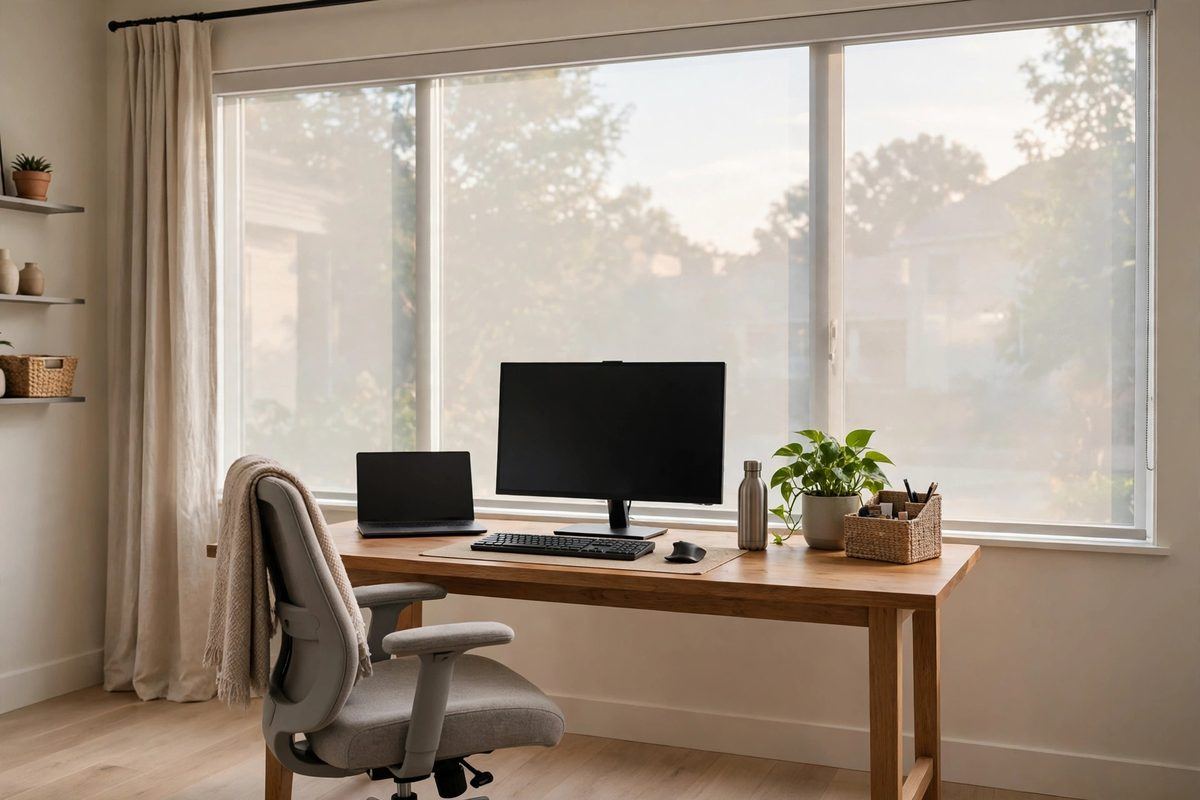
Home office with a large west-facing window, desk and monitor, glare softened by film

Why owners ask about privacy film

Privacy film is asked about for daytime softening, for reliable obscuring, and for separation, with the light-balance point stated throughout. For more background, see the Jeffersonville service-area page and the post on what every Jeffersonville homeowner should know before tinting windows.

  • Daytime softening that is real

    While the sun is up, privacy film softens the view inward on street-facing and neighbor-facing glass. That daytime effect is the strongest case for the film.

  • Frosted obscuring that holds

    Where privacy must hold regardless of hour, frosted film softens the view in both directions while keeping light. Bathrooms and partitions are the usual cases.

  • Separation without darkness

    Bands and gradients separate meeting rooms and work areas visually while keeping spaces feeling open. The level is set room by room.

  • Honesty about nighttime

    No film gives one-way privacy in both directions at all hours, and this page says so. Privacy depends on which side is brighter, and the choice is made with that understood.

What the public listing shows

Listing facts

  • Window tinting service — the only category shown on the Google listing
  • 1107 Reeds Ln, Jeffersonville, IN — 47130, address shown
  • Tuesday through Saturday — 9 AM to 5 PM
  • Closed Monday and Sunday — both days closed
  • Phone: (812) 382-2757 — call during shop hours

Review breakdown

Google reviews ★★★★★4.8

The Google listing shows 4.8 stars across 345 reviews. Three five-star reviews are quoted word for word further down this page.

Five-star reviews ★★★★★322

Of the 345 reviews, 322 are five-star. The other 23 reviews are spread across the lower ratings, and all of them count toward the average.

All other ratings —23

Three four-star, four three-star, six two-star, and ten one-star reviews. The full spread is stated here rather than left out.

Reviews quoted here ★★★★★3

Three reviews are quoted on this page, word for word, with the reviewer's name and the date Google shows. No review text has been edited.

Talk through privacy film with the shop

Privacy film is a room-by-room conversation, and it starts with a call. Call Doyles Window Tinting at (812) 382-2757, Tuesday through Saturday, 9 AM to 5 PM, from the shop at 1107 Reeds Ln in Jeffersonville. Describe the panes, the views, and the hours, and ask about film, pricing, and the light-balance point for your glass. The Google listing shows 4.8 stars from 345 reviews.

  • Privacy glass, discussed by room and by hour
  • Shop at 1107 Reeds Ln, Jeffersonville, IN 47130
  • Open Tuesday–Saturday, 9 AM–5 PM; closed Monday and Sunday
  • Phone: (812) 382-2757
  • Google rating: 4.8 stars from 345 reviews
Call (812) 382-2757
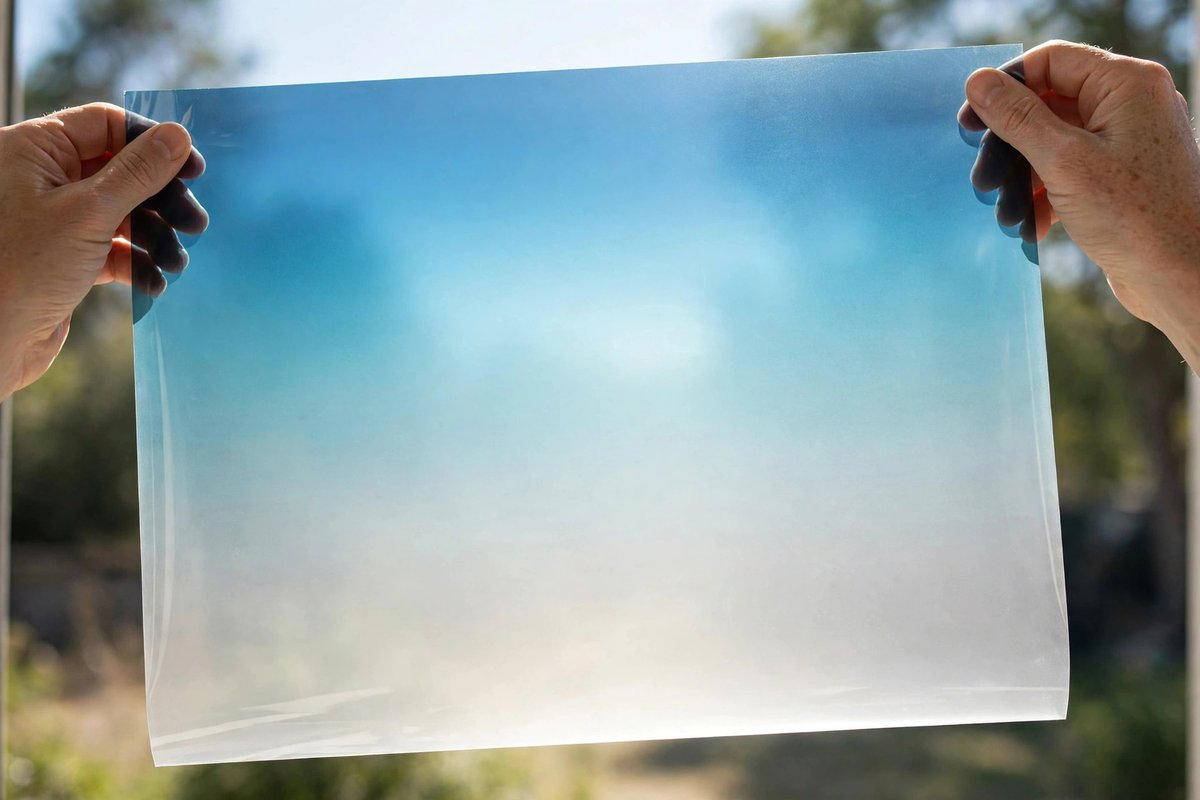
Hands holding a large sheet of window film up to the light, translucent gradient

What customers say on Google

Three five-star Google reviews, quoted word for word, with the name and date Google shows. The shop's overall rating is 4.8 stars from 345 reviews.

“This is the place to go for your tinting needs!! Everybody was super nice and very welcoming!! The tint came out perfect!! They also did the tint on my windshield! It looks amazing!! I love it!! Thanks Doyle’s for a great experience!!”

C

candice january

Local Guide · 5 stars · 2 months ago · Google review

“If you're looking for reliable friendly service and extraordinary quality, then you have to go to Doyle's! I've taken 4 cars to him now and every time was an amazing experience. No bubbles or light gaps like I've had in the past from another other local shop. Can't say enough good things about Doyle's Window Tinting!”

M

Meghan Vest

5 stars · a month ago · Google review

“Amazing price and great service! Doyles has done every vehicle I own and even did the windshield on the can am x3. Best in the business!”

C

Chris Nalley

5 stars · 2 months ago · Google review

Privacy film questions, answered plainly

Plain answers, with the limits stated. Anything about a specific room, pane, or price is a question for the call.

Can people see in at night with privacy film?
That depends on light balance. In daylight, privacy film softens the view inward. At night, with lights on inside and darkness outside, the balance reverses and the view inward is easier. No film gives one-way privacy in both directions at all hours, and frosted obscuring is the option discussed where privacy must hold regardless of hour.
Is reflective film a good privacy choice?
Reflective film raises questions about look, about glare, and about how the facade reads from the street, alongside the light-balance point. Whether a reflective look suits the building is worth asking about before choosing, and the call is where that conversation happens.
What is the difference between privacy film and frosted film?
Frosted film is a privacy approach that softens the view in both directions while keeping light, and it does not depend on light balance the way daytime privacy film does. The decorative page covers frosted film as a core topic, and the choice depends on the room and the hours.
How much does privacy film cost?
This site does not publish prices. Pricing depends on the glass and the film, so call (812) 382-2757 during shop hours and ask about pricing for your panes. The post on home window tinting in downtown Jeffersonville and what to expect gives background on the questions that come with home glass in the older part of the city.

Call about privacy window film in Jeffersonville

Call (812) 382-2757 during shop hours, Tuesday through Saturday, 9 AM to 5 PM, and ask about privacy film for your glass. Describe the panes, the views, and the hours privacy matters most, and ask about pricing. The shop is closed Monday and Sunday.

Call (812) 382-2757 Contact the shop

Contact Doyles Window Tinting

Call (812) 382-2757 to ask about privacy film, or to ask how the light-balance point applies to your glass. The phone is the contact channel listed here. Mention the panes, the views, and the hours, and ask about pricing and the next step during shop hours.

Doyles Window Tinting


  • Address

    1107 Reeds Ln, Jeffersonville, IN 47130

  • Hours

    Monday: Closed
    Tuesday–Saturday: 9 AM–5 PM
    Sunday: Closed
    Call during shop hours

Call (812) 382-2757 Get Quote
Call Quote