
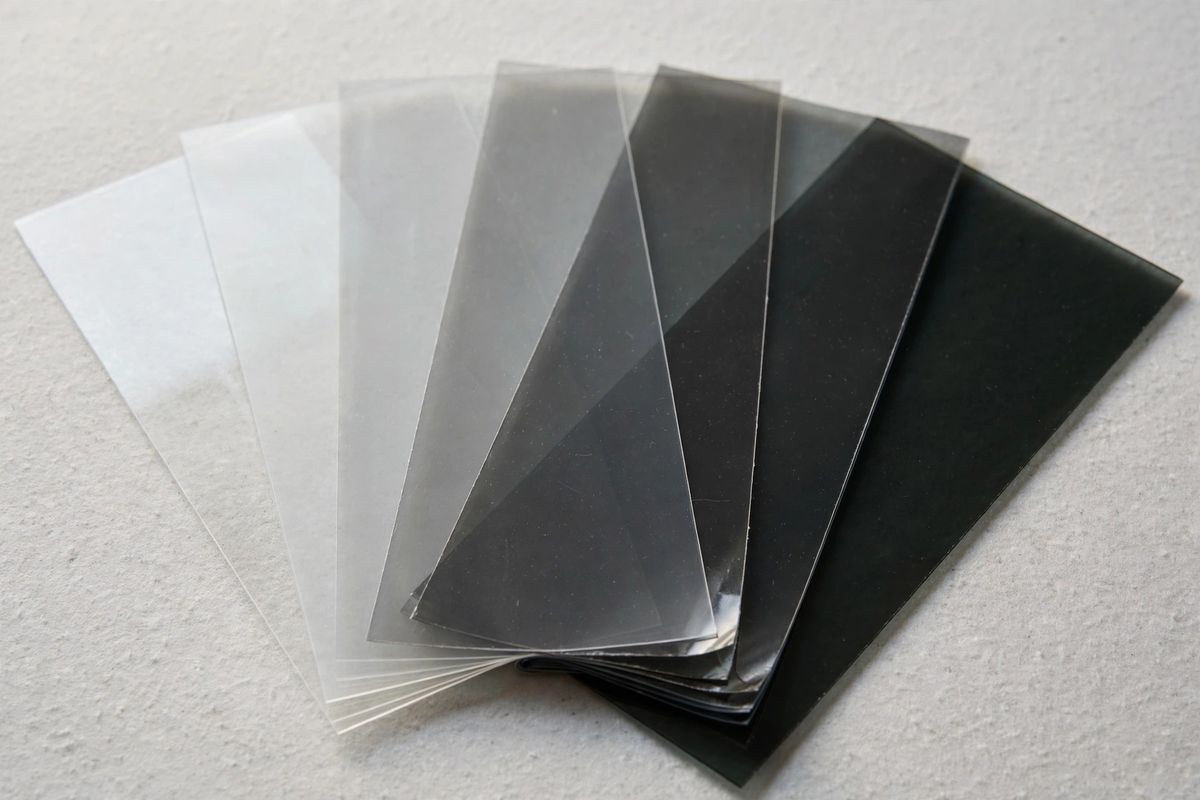
Ceramic film suits drivers and homeowners who want the premium tier for heat control and color stability. Carbon film suits those who want solid performance at a lower point in the market. Neither choice is wrong in itself; the wrong choice is the one made without asking what the film does, what the glass needs, and what the law allows. Ceramic tint here means window film. It is not the paint-protection product sometimes called by a similar name.
The short answer: ceramic vs. carbon window tint in Jeffersonville, IN
The trade-off is straightforward. Ceramic film sits at the premium end of the market and is discussed for stronger heat control and color stability. Carbon film sits in the middle of the market and still delivers glare control and a matte look. If heat control is the main complaint and the vehicle or room faces long sun exposure, ceramic is the tier most often discussed. If budget decides, carbon is the tier most often discussed.
Both films are metal-free, so neither raises the signal questions that metallic film raises. Both hold their color longer than dyed film, whose color shift over time is the honest discussion point for the entry tier. The gap between ceramic and carbon is narrower than the gap between either one and dyed film.
How ceramic and carbon films actually differ
Ceramic window film uses ceramic particles in a construction designed to control infrared heat without metal layers. Carbon window film uses carbon particles and sits in the middle of the market. The construction difference is the reason the two tiers are discussed differently for heat, even when they look similar from outside the glass.
Ceramic particles are discussed as targeting the infrared portion of sunlight, the part felt as heat through glass. Carbon particles absorb light and heat more broadly, which is why carbon films often read a little darker at the same level of heat control. Both descriptions are qualitative; no figure is stated here for either tier.
For a deeper look at the ceramic side, see the ceramic window tinting page. For the carbon side, see the carbon window tinting page. For the limits that apply to any vehicle film, see the Indiana and Kentucky tint law guide.
Heat control: what the film differences mean in an Indiana summer
Ceramic film is discussed as controlling more heat than carbon film, and that gap is the main reason drivers upgrade to ceramic. In Jeffersonville, where the hot season runs from late May into late September in the Louisville normals, heat control is the complaint that drives most film conversations. No figure is stated here for either tier, because performance figures belong on a manufacturer spec sheet for a named film line.
What the difference means in practice:
- Parked cars: a car that sits in open sun all day is where the ceramic and carbon difference shows most. Ask the shop what to expect for your vehicle and parking situation.
- Cooling recovery: less solar heat through the glass means the cooling system has less to do when you set off. The difference is qualitative, not a timed claim.
- Home windows: on west-facing glass, the film choice changes how usable a room feels in late afternoon. Rooms that face west or south are where the tier difference matters most.
If heat is your main complaint, the ceramic window tinting page covers the films discussed for solar load. Describe the glass, the direction it faces, and how long it sits in sun when you call.
What decides the cost difference between ceramic and carbon
No prices are published on this site, and no figure is stated here. Ceramic film sits at the premium end of the market and carbon in the middle, so film choice is the largest single difference between quotes for the same vehicle or room. Window count, glass shape, and whether old film has to come off first also move the figure. See what decides a car window tinting quote for the full list of factors.
The honest way to think about the difference is over the life of the film, not the day of the install. A film that holds its color and performance longer changes the comparison, and a film that has to be stripped and redone costs more than a film fitted once. Ask what is put in writing about the film and the install, and read it before booking.
Where carbon wins on cost is scale: several work vehicles, a fleet, or a set of rooms where the budget decides. Carbon still gives glare control and a matte look without the premium tier. Ask the shop to talk through both tiers for the same job, on the same basis.
Color stability and film life: ceramic vs. carbon
No lifespan figure is stated here for either tier, because film life depends on the film line, the exposure, and the care it gets, and no manufacturer figure is published on this site. Qualitatively, ceramic film is discussed as color-stable, carbon film as holding its color longer than dyed film, and dyed film as the tier whose color shift over time is the discussion point.
Jeffersonville summers are long, hot, and humid, with strong ultraviolet exposure in the Louisville normals. A car parked outside sees more of that exposure than a car kept under cover, and south- and west-facing glass sees more than shaded glass. Exposure, not the calendar alone, is what ages film.
For homes, the stakes are higher in one respect: replacing film on a large picture window is a bigger job than re-tinting a car door. Homeowners comparing films for a sunroom or a west-facing living room should weigh color stability alongside heat control. See the home window tinting page and the Oak Park page, where picture windows define the conversation.
Clarity, glare, and night driving
Ceramic film is discussed as reading clearer at night, and carbon film as a close second. Both are discussed as clearer than dyed film at darker shades. If night driving matters to you, say so when you call, and ask how the film you are considering reads after dark.
Glare control is where carbon holds its own. At the same darkness, carbon cuts glare from oncoming traffic and harsh afternoon sun about as well as ceramic. The difference between the tiers is heat control and color stability, not glare. If brightness is your only complaint, carbon may be all you need.
Windshield rules are strict and differ between Indiana and Kentucky. This post does not restate them. Read the Indiana and Kentucky tint law guide before choosing any windshield film, and do not rely on a summary from another site.
Which suits your car or home: ceramic or carbon?
Ceramic suits drivers and homeowners who want the premium tier for heat control and color stability. Carbon suits those who want solid performance at a lower point in the market. There is no universal winner; the right answer depends on the glass, the exposure, and what matters most to you.
A way to decide:
- Keep the car and park outside: ceramic, for the heat difference on every summer day.
- Short-term vehicle, work truck, or tight budget: carbon, for glare control and a matte look without the premium tier.
- Home or office with west-facing glass: ceramic for heat control, carbon if the room is already shaded for much of the day.
- Classic or show car: ceramic, for color stability over long ownership. Ask about fit for older glass and seals.
If you are tinting a daily driver and want the full range of film types beyond these two, the automotive window tinting page covers dyed, ceramic, and carbon options.
Common mistakes on Jeffersonville tint jobs
The biggest mistake is choosing film by darkness instead of by what it does. Two films at the same darkness can perform very differently for heat control. Ask what a film does for heat and glare, not only how dark it looks, and check the law guide before choosing darkness for a vehicle.
Other mistakes that come up often:
- Buying film online and installing it yourself. Fitting film cleanly, especially on curved glass, is skilled work. A failed install usually ends in bubbles, peeling edges, and a removal job.
- Underestimating defroster lines. Rear glass with defroster lines needs care during removal and fitting. Ask how rear glass is handled before work starts.
- Ignoring the applicable law. Indiana and Kentucky rules differ, and a film choice that breaks the applicable limits can mean removal and re-tinting. The law guide carries the figures.
- Not asking what is put in writing. Ask what the shop states in writing about the film and the install, and read it before booking.
Homeowners sometimes try to film a large sliding door with a film meant for a car. Glass type matters, and the wrong film can fail at the edges. The home window tinting page covers the questions to ask for house glass.
When to call a professional
Call a professional when you want the film to hold up, when the glass is curved or carries defroster lines, or when you are tinting more than one window. Fitting is the part that decides whether a good film performs as it should.
Doyles Window Tinting is a window tinting service in Jeffersonville, Indiana, at 1107 Reeds Ln, open Tuesday through Saturday, 9 AM to 5 PM. Call (812) 382-2757 during open hours to talk through ceramic and carbon options for your vehicle or building.
Get help with window tinting in Jeffersonville
Whether you land on ceramic or carbon, fitting matters as much as the film. Call Doyles Window Tinting at (812) 382-2757 during open hours and describe the vehicle or the rooms, the direction the glass faces, and what matters most to you.