
How much does car window tinting cost in Jeffersonville, IN? That depends on film type, window count, glass condition, and how much old tint has to come off first. Those four factors decide most quotes, and this post takes each one in turn. Doyles Window Tinting does not publish prices, so no figure in this post should be read as a quote. Call (812) 382-2757 during open hours to talk through your vehicle.
Below is the structure of a quote: what changes it, what to ask about, and what to check before you compare one shop with another. If you drive across the river into Kentucky, the law questions come first; see the Indiana and Kentucky tint law guide.
What decides the cost of car window tinting in Jeffersonville
Car window tinting is aftermarket film applied to vehicle glass to cut heat, glare, and ultraviolet exposure while adding privacy. The figure for a given car tracks the film, the glass, and the condition of what is already on the glass, more than any single headline factor. Two cars that look alike can carry different quotes because their window counts, glass shapes, and existing film differ.
The factors that most often move a quote are:
- Coverage: front windows only, or the full vehicle. More glass means more film and more work.
- Film type: dyed, carbon, ceramic, and clearer film options sit at different points in the market, and the film is usually the largest single difference between quotes.
- Vehicle shape: window count, glass size, and curved rear glass all change the work involved.
- Existing film: old film that has to come off first adds removal work, and the condition of the adhesive matters.
- Glass condition: defroster lines on rear glass need care during removal, and damage or contamination on the glass changes the prep.
None of these factors is priced on this site. The honest use of this list is to describe your car accurately when you call, so the conversation starts from the same facts.
Why car tint quotes vary for the same vehicle
Quotes for the same vehicle vary because four things change the job: film grade, window count, glass condition, and how much disassembly the car needs. A quote that leaves one of those unstated is not comparable with a quote that states it.
A dyed film and a ceramic film can look similar on the day they are installed. Over time, dyed film is the tier whose color stability is the honest discussion point, and ceramic is the premium tier in the local market. That difference in film construction is the main reason two quotes for the same car can sit far apart. See ceramic vs. carbon window tint for how the tiers differ.
Window count matters more than people expect. A coupe carries fewer pieces of glass than a crew-cab truck, and small quarter windows still take time to fit. A coupe window tinting quote and a truck quote are different jobs, even when the film is the same.
Glass condition is the wild card. If your car already has tint, especially film that has bubbled or shifted color, removal adds work. Rear glass with defroster lines is the piece that needs the most care, because the grid is easy to damage during removal.
Finally, southern Indiana summers are part of why drivers ask about ceramic and clearer film options that control heat without very dark glass. That is a film choice, not a labor choice, and it is often the largest single reason two quotes differ. Any choice about darkness also has to respect the law; the law guide carries the figures.
How vehicle type changes a car tint quote
Vehicle type changes a quote through window count and glass shape: more glass means more film and more work, and curved or oversized glass adds fitting time.
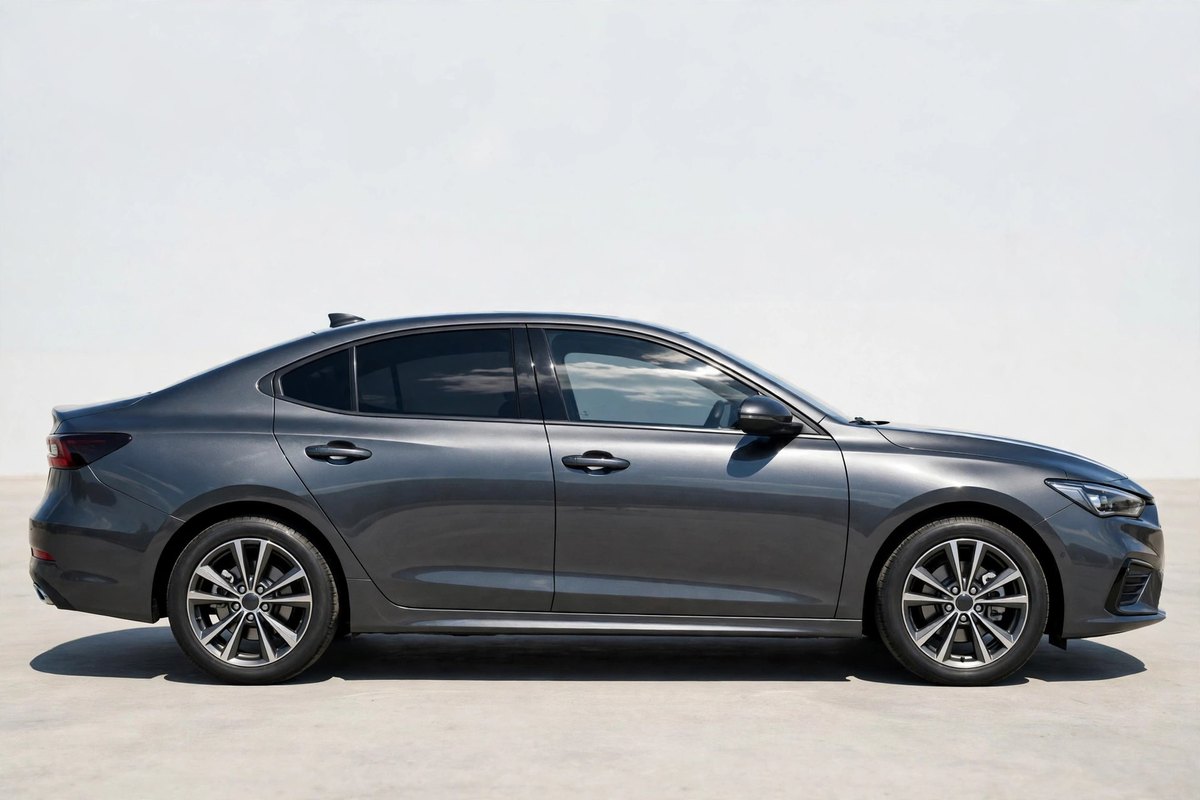
- Sedan: the standard four-door shape, with a rear window that often carries defroster lines.
- Coupe: fewer windows, but tighter access and curved rear glass that needs careful fitting.
- SUV: more windows, including cargo-area glass and quarter windows.
- Truck, crew cab: more windows again, including small quarter windows and a large rear window.
- Classic car: curved glass and older seals, where patterns may not exist and fit is judged piece by piece.
- RV: if that is your question, call and ask whether RV work is offered — this post makes no promise about it.
If you drive an SUV or truck, start with the automotive window tinting page — quarter windows and cargo glass affect a quote. Sedan owners can start with the automotive window tinting page.
Classic cars sit apart for a reason: curved glass and oversized panels cannot always be cut from a pattern, so fitting takes longer. Time is the line item in those jobs, and it is worth asking how it is accounted for. RVs are a separate question — call and ask whether RV work is offered, since this post makes no promise about it.
How film type changes a car tint quote
Film construction is usually the largest single difference between quotes. Dyed film sits at the entry point of the market, carbon in the middle, and ceramic at the premium end. Here is what each tier means in practice:
Dyed film
The entry-level option. It darkens glass and cuts glare, but it absorbs heat rather than rejecting it, and color stability over time is the discussion point. It suits a car that lives mostly under cover.
Carbon film
Carbon film holds its color longer than dyed film and rejects more heat without any metal content, so signal questions do not arise. The carbon window tinting page covers it in more detail.
Ceramic film
The premium tier in the local market. Ceramic film is discussed for heat control with less reliance on darkness, which matters where the law limits how dark glass can go. See the ceramic window tinting page, and the law guide for the limits themselves.
Clear film options
Clearer, lighter film options suit drivers who want heat and glare control without dark glass, and glass where appearance matters. What is available, and what it does, is a question for the shop, because film lines differ and no line is named on this site.
One note on the law: Indiana and Kentucky set different vehicle tint rules, and a Jeffersonville driver who crosses the river sits in both. This post does not restate the figures. The Indiana and Kentucky tint law guide names the primary sources, carries every figure, and states what is still open.
What a car tint estimate should spell out
An estimate should list the film, the window count, old-tint removal, and what the shop puts in writing about the film and the install. If any of those is missing, the figure is not comparable with another quote.
Here is a checklist for comparing quotes on the same basis:
- Film type and line: a film category alone is not enough; the specific line matters.
- Window count: confirm whether quarter windows and the rear glass are included.
- Old tint removal: quoted separately or included, and how defroster lines are handled.
- What is put in writing: ask what the shop states in writing about the film and the install, and read it before booking.
- Law check: does the shop check the applicable limits before install, for both Indiana and Kentucky where relevant?
If you are comparing quotes, the lowest figure is not always the lowest total cost. A job that fails early and has to be stripped and redone costs more than a job done once. Ask what is included, what is in writing, and how removal is handled, and compare like with like.
Mistakes that raise the total cost of car window tinting
The most expensive tint mistake is paying twice: once for a job that fails, and again to strip it and start over. These are the ones that come up most:
- Choosing film by darkness alone. Darkness and heat control are different things. Ask what a film does for heat and glare, not only how dark it looks.
- Skipping the law check. A film choice that breaks the applicable limits can mean removal and re-tinting at your expense. The law guide carries the figures.
- Underestimating rear glass prep. Defroster lines are where careless removal fails first. Ask how rear glass is handled before work starts.
- Rolling windows down before the film has cured. Curing takes time, and the time varies with conditions. Ask the shop what to do and what to avoid, and follow it. See how long window tint takes to cure in cooler months.
- Not reading what is in writing. Ask what the shop puts in writing about the film and the install, and read it before booking.
Drivers also sometimes pay for a full-vehicle job when they only wanted the front doors matched to factory rear glass. If your rear glass is already factory-tinted, a front-doors-only job may be the right call. Describe what you want when you call, and ask what coverage fits it.
When to call a professional for car window tinting
Call a professional when the glass is curved, the car has defroster lines, or the old film is already failing. Those three situations are where do-it-yourself kits most often turn into a removal job.
Failing film, spreading bubbles, and back glass where the defroster grid is at risk are removal conversations first. The automotive window tinting page covers what is involved, and the law guide covers the limits that apply before any film is cut.
One honest note: if you drive an older car and only want the front doors darkened within the law, a two-window job may be the right call. Say so when you call, and ask what fits.
Get help with window tinting in Jeffersonville
If you want a figure for your car rather than a list of factors, call Doyles Window Tinting at (812) 382-2757 during open hours and describe the vehicle, the film you have in mind, and whether old film needs removing. The shop is at 1107 Reeds Ln, Jeffersonville, IN 47130, open Tuesday through Saturday, 9 AM to 5 PM.